
Rabbits are wonderful companions with unique personalities, but understanding their behaviour can sometimes feel like learning a new language. Unlike cats or dogs, rabbits communicate through subtle body language and behaviour. Being able to interpret these signs is crucial for ensuring their happiness, recognising stress, and identifying potential illnesses early.
Signs of a Happy Rabbit
A happy rabbit is a joy to observe. When your bunny is content, they will display a variety of behaviours that reflect their comfort and well-being. Here are some key signs:
- Binkying
- A binky is when a rabbit jumps into the air, twisting their body and flicking their feet. This exuberant leap is the ultimate sign of rabbit happiness. If your rabbit is binkying, they’re overjoyed!
- Flopping
- A rabbit flopping onto their side and stretching out is a strong indicator of relaxation and trust. It means they feel safe and comfortable in their environment.
- Purring
- Rabbits don’t purr like cats, but they do make a gentle teeth-grinding sound when content. This “purring” is often accompanied by a relaxed posture.
- Exploration and Curiosity
- Happy rabbits are inquisitive and love exploring their surroundings. They’ll sniff, nudge, and investigate new objects or areas with enthusiasm.
- Relaxed Body Language
- A happy rabbit may lounge with their legs stretched out behind them or sit with their ears in a relaxed, neutral position. Their eyes will be bright, and they’ll appear at ease.
- Chinning
- Rabbits have scent glands under their chin, and they mark their territory by rubbing their chin on objects. If your rabbit is chinning items in their environment, they’re comfortable and claiming their space.
Signs of Stress in Rabbits
Stress can negatively impact your rabbit’s health and behaviour. Recognising the signs early can help you address the source of their discomfort:
- Thumping
- Rabbits thump their hind legs to warn of danger or express fear. If your rabbit is thumping repeatedly, they might feel threatened or stressed.
- Hiding or Cowering
- A stressed rabbit will often retreat to their hiding spot and may cower with their body pressed to the ground, ears flat against their back.
- Restlessness
- Pacing, frequent shifting, or excessive digging can indicate that your rabbit is feeling anxious.
- Aggression
- Rabbits under stress might lunge, bite, or growl. This behaviour is often a defensive response to feeling threatened or overwhelmed.
- Excessive Grooming
- While grooming is normal, overgrooming to the point of fur loss or skin irritation can be a sign of stress.
- Loss of Appetite
- A stressed rabbit may stop eating or drinking. Since rabbits have sensitive digestive systems, even a short period without food can be dangerous.
Signs of Illness in Rabbits
Rabbits are prey animals, and they’re masters at hiding signs of illness to avoid appearing vulnerable. As a result, it’s important to be vigilant about any changes in behaviour or appearance. Here are some common indicators that your rabbit might be unwell:
- Changes in Eating or Drinking Habits
- A healthy rabbit will eat and drink regularly. If your rabbit suddenly stops eating, refuses their favourite treats, or consumes less hay, it’s a red flag. Dental issues or gastrointestinal stasis (GI stasis) could be the cause.
- Lethargy
- A rabbit that is unusually quiet, inactive, or reluctant to move may be feeling unwell. Lethargy is often a sign of underlying health issues.
- Unusual Droppings
- Rabbit droppings are an important indicator of their health. Healthy droppings should be round and firm. Diarrhoea, small or misshapen droppings, or a lack of droppings can signal digestive problems.
- Laboured Breathing
- Rapid, noisy, or strained breathing could indicate respiratory issues. Look for other signs such as nasal discharge or sneezing.
- Weight Loss
- A gradual or sudden loss of weight, even if your rabbit seems to be eating, is a sign that something might be wrong.
- Change in Posture
- A hunched posture, where the rabbit looks uncomfortable or appears to be “guarding” their abdomen, can be a symptom of pain.
- Unkempt Appearance
- Rabbits are meticulous groomers. If your rabbit’s coat looks dull, dirty, or unkempt, it may be too unwell to groom itself properly.
- Head Tilt or Balance Issues
- A rabbit with a tilted head, loss of balance, or difficulty moving may have an inner ear infection or neurological condition.
Promoting Happiness and Reducing Stress in Rabbits
To keep your rabbit happy and healthy, it’s essential to provide the right care and environment. Here are some tips:
- Proper Housing
- Ensure your rabbit has a spacious, safe living area with plenty of room to hop, stretch, and explore. Outdoor rabbits need secure housing and a run, while indoor rabbits require a rabbit-proofed space.
- Enrichment and Toys
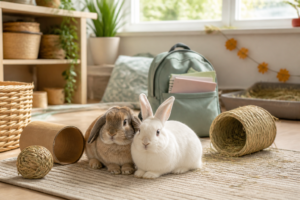
- Provide toys, tunnels, and opportunities for mental stimulation. Cardboard boxes, chew toys, and treat puzzles can keep your rabbit entertained.
- A Balanced Diet
- A rabbit’s diet should consist primarily of fresh hay, supplemented with leafy greens and a small amount of high-quality pellets. Fresh water should always be available.
- Social Interaction
- Rabbits are social animals and thrive with companionship. If possible, consider adopting a bonded pair or spending plenty of time interacting with your rabbit.
- Routine Vet Visits
- Regular check-ups with a rabbit-savvy vet can help detect and prevent health issues. Ensure your rabbit is vaccinated and spayed or neutered.
- Stress Reduction
- Avoid sudden changes to your rabbit’s environment or routine. Introduce new experiences gradually and ensure they have a quiet space to retreat to when needed.
When to Seek Veterinary Care
If you notice any of the signs of illness mentioned above, it’s crucial to seek veterinary care promptly. Rabbits can decline quickly when unwell, so early intervention is key. Always consult a rabbit-experienced vet who understands their specific needs.
By understanding rabbit behaviour, you can create a safe, happy, and healthy environment for your bunny. Keep an eye on their daily habits, provide plenty of love and care, and your rabbit will reward you with trust and affection for years to come. ❤️✨