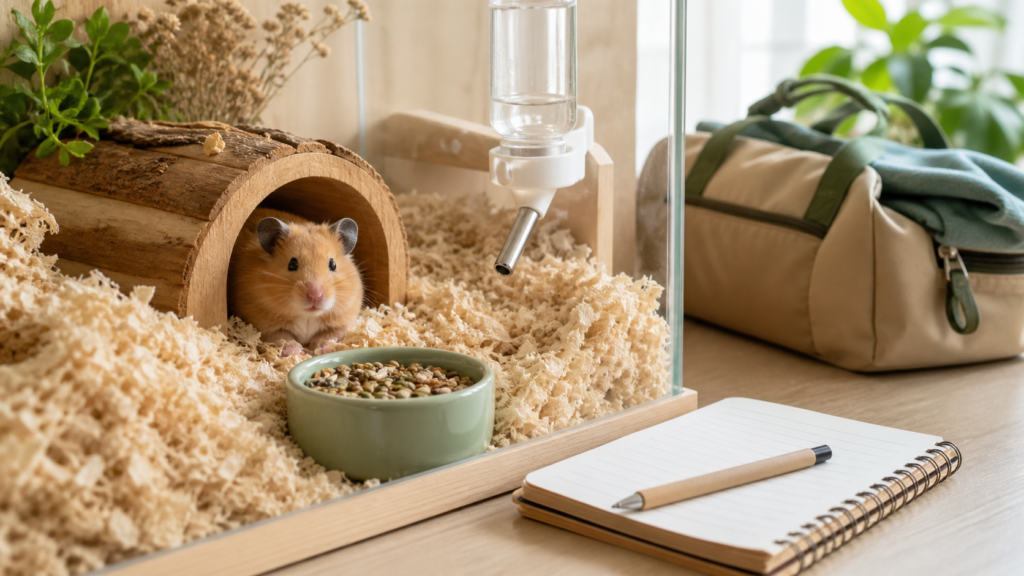
Summer trips can be exciting for us, but they can be unsettling for a hamster if care is rushed or improvised. Hamster holiday care is really about keeping things calm, predictable and safe while you are away 🐹💛
If you are planning a break this August, the kindest approach is usually to keep your hamster at home in their usual enclosure and arrange a confident sitter to check them properly. Most hamsters cope far better with a familiar set-up than with unnecessary travel, noise or sudden routine changes.
Why hamster holiday care matters
Hamsters are small and sensitive, and problems can become serious quite quickly. A water bottle can stop working, food can be hidden rather than eaten, bedding can become damp, and warm rooms can heat up faster than people realise. Because hamsters are prey animals, they may also hide signs of stress or illness until they are quite poorly.
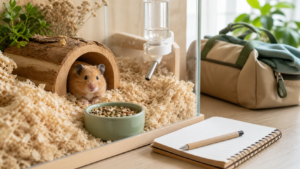
Good hamster holiday care helps prevent avoidable emergencies. It also means your hamster keeps their usual smells, sleeping space, wheel, hides and nesting material, which can make a big difference to how secure they feel while you are away.
The best option is usually care at home
In most cases, the best hamster holiday care plan is home-based care. That means your hamster stays in their normal enclosure, in the same quiet room, with a trusted adult visiting to carry out daily checks.
Taking a hamster away with you may sound easier, but travel can bring extra risks. Car journeys, unfamiliar rooms, temperature changes, vibration and handling can all add stress. Holiday accommodation may also be noisy, bright or unsuitable for a nocturnal small pet.
If you truly have no safe option except temporary transport, speak to a knowledgeable exotic vet or experienced small pet boarding provider first so the journey and set-up can be planned properly.
What a good hamster sitter should do every day
- Check that your hamster is breathing normally, moving comfortably and looks bright when awake.
- Refresh water and make sure the bottle or bowl is actually working.
- Provide the usual food in the usual way.
- Look for signs that fresh food has spoiled or been ignored.
- Remove obviously wet or soiled bedding if needed, without doing a full deep clean.
- Check the room temperature and keep the enclosure out of direct sun.
- Make sure the enclosure is secure and that other pets or children cannot disturb it.
For hamster holiday care, daily checks matter more than long play sessions. A sitter does not need to force interaction. Calm observation, topping up essentials and spotting early problems are far more important.
What to prepare before you go away
1. Leave clear written instructions
Write down your hamster’s usual food, feeding time, favourite hiding places, normal sleep pattern and any medication. Include your vet details and an emergency contact who can make decisions if you are travelling.
2. Test all equipment in advance
Check bottle spouts, cage clips, wheel fixings and any cooling measures before you leave. Do not assume everything is fine just because it worked last month.
3. Keep the routine familiar
Try not to redesign the enclosure, swap food brands or introduce big changes right before a holiday. Hamster holiday care works best when your sitter is following a routine your hamster already knows.
4. Prepare enough supplies
Leave more bedding, food and substrate than you think will be needed. Pop everything in one clearly labelled place so your sitter does not have to guess.
5. Think about warm weather
Mid-August can still bring very warm rooms, even when outdoor forecasts seem moderate. Keep the enclosure away from windows, conservatories and stuffy spare rooms. Your sitter should know to watch for heat stress and to keep airflow gentle rather than drafty.
Common hamster holiday care mistakes to avoid
- Leaving a hamster completely alone for several days.
- Putting in lots of watery treats and assuming that replaces proper water checks.
- Cleaning out the whole enclosure just before you leave, which can remove familiar scent and increase stress.
- Moving the enclosure into a busy kitchen, sunny window or holiday rental for convenience.
- Asking someone with no small pet experience to “just top things up” without instructions.
Another common mistake is assuming a hamster is low maintenance because they are small. Hamsters may be independent in some ways, but they still need thoughtful daily care and a watchful eye.
Signs your sitter should treat as urgent
Ask your sitter to contact you and a vet urgently if they notice laboured breathing, collapse, bleeding, diarrhoea, a wet tail area, obvious weakness, refusal to eat, severe lethargy when awake, a stuck eye, or any sign of overheating such as panting, stretching out unusually, or being floppy and unresponsive.
It helps to normalise this in advance. Reassure your sitter that they are not “making a fuss” if something feels wrong. Acting early is part of good hamster holiday care.
If you are adopting or fostering later this summer
If you are thinking about welcoming a hamster after your trip, now is a lovely time to use the holiday period to plan the right set-up rather than rushing into it. Greatfield Small Animal Rescue’s website is a good place to keep an eye on rescue updates and small pet advice, and it is always kinder to prepare first and adopt second 🏡
Quick recap
- Keep your hamster at home if possible.
- Arrange a confident sitter to do proper daily checks.
- Leave clear written instructions, supplies and emergency contacts.
- Protect against warm rooms, direct sun and equipment failure.
- Ask your sitter to act quickly if anything seems wrong.
The goal of hamster holiday care is simple: familiar surroundings, gentle daily checks and no surprises. A little planning now can make your break less stressful for you and much safer for your hamster 💛
Hamster holiday care FAQs
Can I leave my hamster alone for a weekend?
It is much safer to arrange a daily check. Water bottles can fail, rooms can overheat and illness can appear quickly in a small pet.
Should I take my hamster on holiday with me?
Usually no. Most hamsters cope better staying in their normal enclosure with a trusted sitter than travelling to an unfamiliar place.
Do I need to deep clean the cage before I go?
Not usually. A full clean right before a trip can be unsettling. A safer plan is to leave the enclosure stable and ask your sitter to spot clean if needed.