Care Information
Degus are a little larger than gerbils and are classed as exotics pets.
Degus are best housed in groups of 2 or more as they are social animals and can be easily tamed when you put in the work. Degus are intelligent, playful and curious and love interaction and exercise. Degus make little warbling noises when happy, they may make noises when having disagreements, but are generally silent other than this.
They live approximately 6-8 years, although some do live longer as this is an average. Degus often suffer from dental disease as they get older, which requires regular vet visits.
Before you take them on, it’s important to consider whether you will be able to commit to them for their whole lives. They don’t generally make good pets for children, who often lose interest. They also need a large amount of space.
Additionally, they can be quite expensive to keep. Over their lifetime (not including the initial cost of housing) food, bedding, accessories and vet bills could easily amount to over £4,000 per degu.
They’re between 12-18cm in size, and weights vary depending on the degu, though an average healthy weight is somewhere between 180g and 300g.
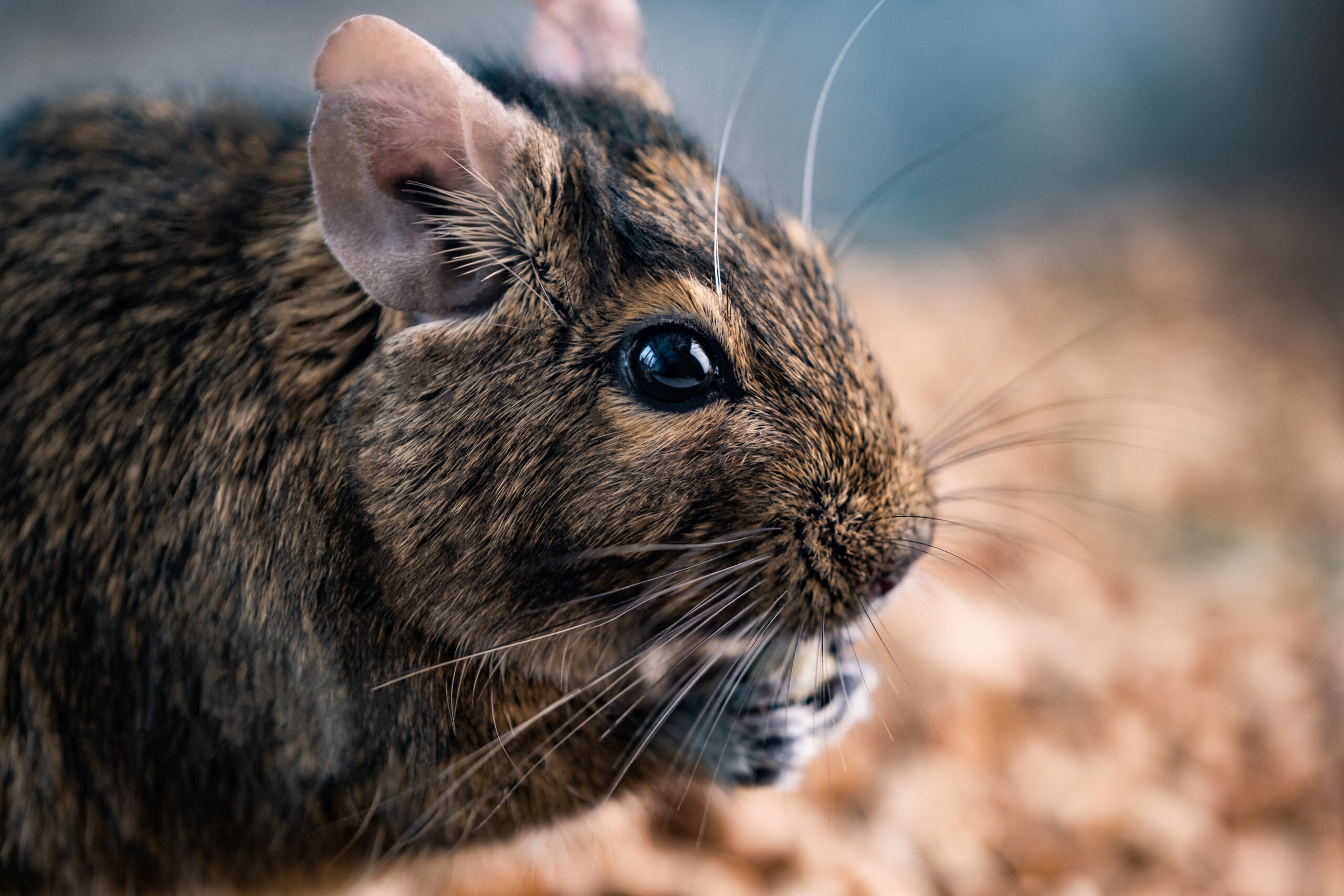
They’re usually brown (agouti) and/or white. They are most active during the day and usually sleep throughout most of the night, you’ll often see them early in the morning still snuggled up in a pile together.
Degus enjoy time out of their cage but must be supervised to prevent any accidents such as chewing cables and falls.
Letting you degus out of the cage for free roam time each day will make them very happy. Provide hides, boxes and sand baths in their free roam area.
Degus aren’t always keen to be handled but will rarely bite you – they can be quite speedy though so just be careful not to accidentally drop them. They often happily perch on you whilst having a run around outside their cage and will take treats from your hand.
IMPORTANT: never grab a degu by the tail as they can shed half of it as a way to get away from predators in the wild.
As with other prey animals, degus can sometimes be jumpy so they’re not suitable for young children or homes with curious/excitable cats and dogs unless they can have a separate and secure room. They may never enjoy handling and that’s okay.
Degus should be regularly checked over for health issues. You should handle them and check their coat, check for any lumps and bumps. Degus can develop tumours like any animal, that’s why it’s important to physically touch your degu all over gently to check for any abnormalities.
You should look at the size of their poos and make sure they’re a good healthy size. If the poos look smaller than usual, it’s time for a vet visit.
Another thing to check is their mouth. Check that their front teeth line up nicely and are a healthy orange. If their teeth aren’t equal, or are pale then you need to book a vet visit.
When they are in their home, you should make sure they’re picking up food and eating it without an issue. Not finishing a piece of food, dropping food, drooling and making audible grinding noises indicate your degu may have dental issues and need to go to the vet. Other signs of dental issues are a runny nose and water eyes.
Degus can also get respiratory issues, where you may notice water eyes, noses and sneezing. This can as said above, also be symptoms of dental issues so a vet visit is needed straight away.
Degus often bond and pair better in male/female pairs. Degus are often neutered successfully to allow for males to live with females. You should only ever have one neutered male to a female or group of females.
Please click on the button below to get in touch
Typically replies within an hour
I will be back soon