Rabbits are intelligent, social lagomorphs with complex needs. They can live for around 10 years or longer with the right care, but they are still one of the most misunderstood and neglected companion animals in the UK.
This guide covers the essentials: companionship, diet, housing, cleaning, enrichment, bedding, handling and medical needs, so you can give rabbits a safer, healthier and more natural life.
Rabbits need room to run, stretch, dig, forage, hide, rest and choose where they want to be. They also need the companionship of another suitable rabbit.

Plus constant access to fresh water, suitable space, companionship, enrichment and regular veterinary care.
Rabbits are prey animals, herbivores and highly social companions. Their care is not simple, cheap or low-maintenance, and they should never be treated as a short-term or children’s starter pet.
Rabbits are incredibly social and should be kept in suitable bonded pairs or groups.
Rabbits are crepuscular, so their most active times may not match your schedule.
With good care, rabbits can live around 10 years or even longer.
They need room to run, stretch, stand, dig, forage, hide and rest comfortably.
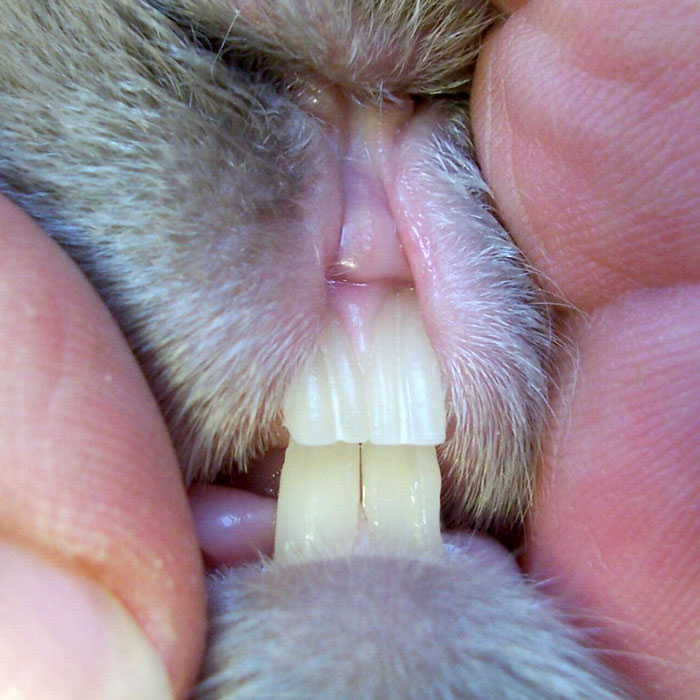
A good diet is vital to keeping rabbits healthy. Hay provides long-strand fibre, helps keep the gut moving properly, and helps wear down teeth that grow continuously throughout life.
Rabbits would naturally graze for long periods, so they should have unlimited access to good-quality hay every day. Fresh water should always be available, and bowls are usually more natural for rabbits than bottles.
A rabbit who stops eating, produces fewer droppings or seems quiet and uncomfortable may need urgent veterinary care.

This is a simple way to visualise a rabbit’s daily diet. Individual rabbits may have specific medical or weight-related needs, so always follow rabbit-savvy veterinary advice where needed.
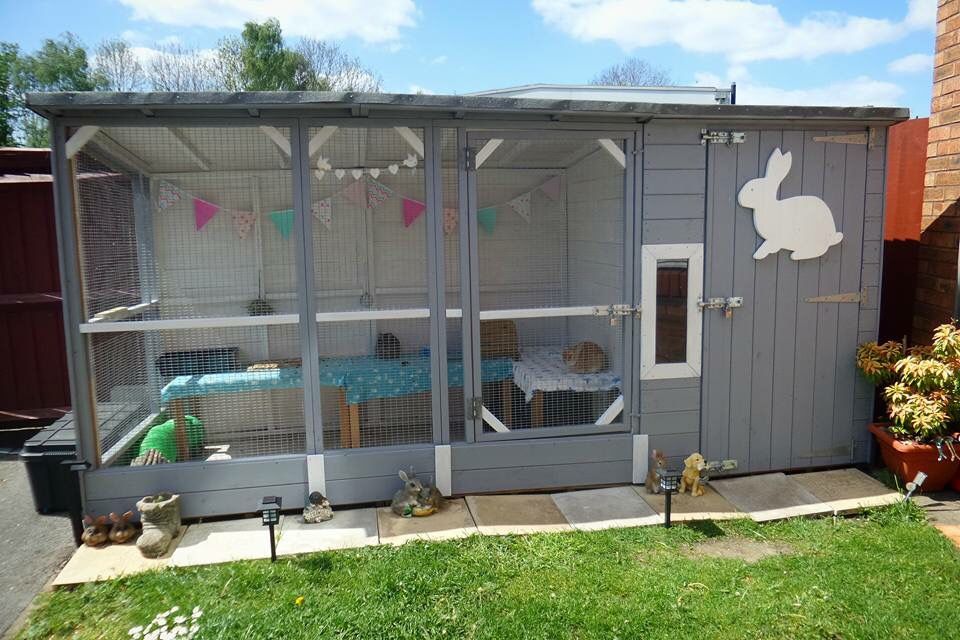
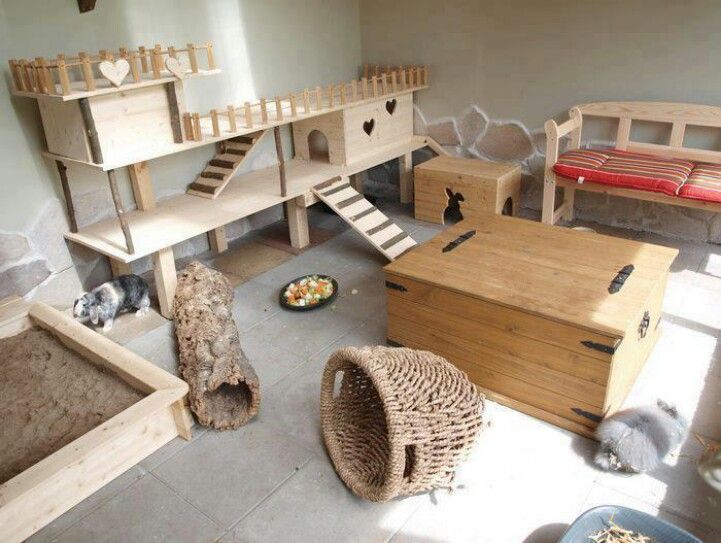
Rabbits need much more than a hutch. For a pair of normal-sized rabbits, we recommend a minimum housing area of 3m x 2m x 1m high. The space should allow them to run, hop, stretch out fully, stand up, hide, rest and choose different areas.
Rabbits can live indoors or outdoors, but the setup must be safe, secure and suitable. Outdoor accommodation should be predator-proof and weather-protected. Indoor rabbits need safe bunny-proofed space, protection from chewing hazards and areas where they can behave naturally.
Rabbits who cannot express natural behaviours can become stressed, frustrated, inactive or depressed.
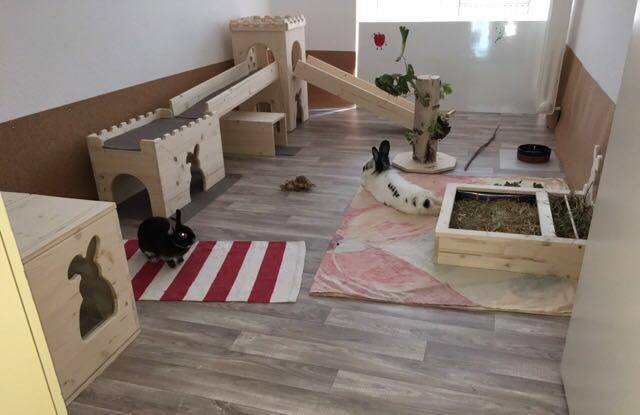
Rabbits need clean, dry living areas, fresh hay and regularly cleaned litter spaces. Good daily hygiene helps reduce smells, prevent damp bedding and lower the risk of disease.
Most routine cleaning is simple: remove wet bedding, refresh hay, clean bowls and litter trays, and check the setup every day. Deeper cleaning is sometimes needed, especially after illness, parasites, infectious disease or between animals.
In the wild, rabbits spend a huge amount of time foraging. Most enrichment should help them express natural behaviours such as grazing, digging, chewing, hiding, exploring and moving.
Enrichment does not need to be complicated. Hay, safe forage, tunnels, boxes, platforms, digging areas, chew toys and scatter feeding can all help rabbits stay active and interested.
Bedding should keep rabbits comfortable, dry and warm where needed. Outdoor rabbits in particular need well-insulated sleeping areas and plenty of clean, dry bedding in colder weather.
Good-quality soft straw is often useful for warmth and comfort, especially outdoors. Paper-based bedding, shredded paper products, Megazorb and other safe options can be used depending on the setup. Absorbent litter areas can help keep the main space cleaner.

Rabbits are prey animals. Many do not enjoy being lifted or cuddled, and they may panic, scratch, bite or injure themselves if they feel unsafe. A rabbit can still be affectionate without wanting to be held.
Build trust slowly. Sit on the floor, allow them to approach, use hand feeding, and let them choose interaction. Many rabbits enjoy gentle strokes with all four paws safely on the ground.
Building a relationship with a rabbit takes time, patience and respect for their body language.

Rabbits hide pain and illness well, so small changes in behaviour, appetite or droppings can be important. Regular checks, vaccinations and prompt veterinary care are essential.
Rabbit owners are advised to vaccinate against Myxomatosis and Rabbit Haemorrhagic Disease, including RHD strains 1 and 2, with boosters for life. Dental problems, parasites, abscesses, gut issues and flystrike can all become serious quickly.
If you see maggots, wounds, a dirty bottom, sudden collapse or severe discomfort, contact a vet immediately.
These are the things we wish every rabbit owner knew before bringing rabbits home.
Rabbits are social animals and should usually live with a suitable bonded rabbit companion. Human attention is not a replacement for rabbit companionship.
No. A hutch on its own is not enough. Rabbits need a large, secure living area with constant access to space where they can run, hop, stretch, hide, dig and forage.
Yes. Rabbits need protection against Myxomatosis and Rabbit Haemorrhagic Disease, including RHD strains 1 and 2. Speak to a rabbit-savvy vet about current vaccine schedules.
Rabbits are delicate prey animals and often do not enjoy being picked up. They need patient, calm handling and responsible adult care. They should never be bought as low-maintenance children’s pets.
Rabbits need unlimited hay, fresh water, suitable greens and a small amount of high-quality nuggets. Fruit, carrots and sugary treats should only be occasional.
Call a vet urgently if your rabbit stops eating, produces fewer droppings, seems hunched, quiet, bloated, weak, painful, has breathing issues, dental symptoms, flystrike signs or any sudden change that worries you.
Whether you are preparing to adopt, improving your setup, worried about your rabbits, or need kind, practical advice, please get in touch. We are here to help where we can.
Typically replies within an hour
I will be back soon