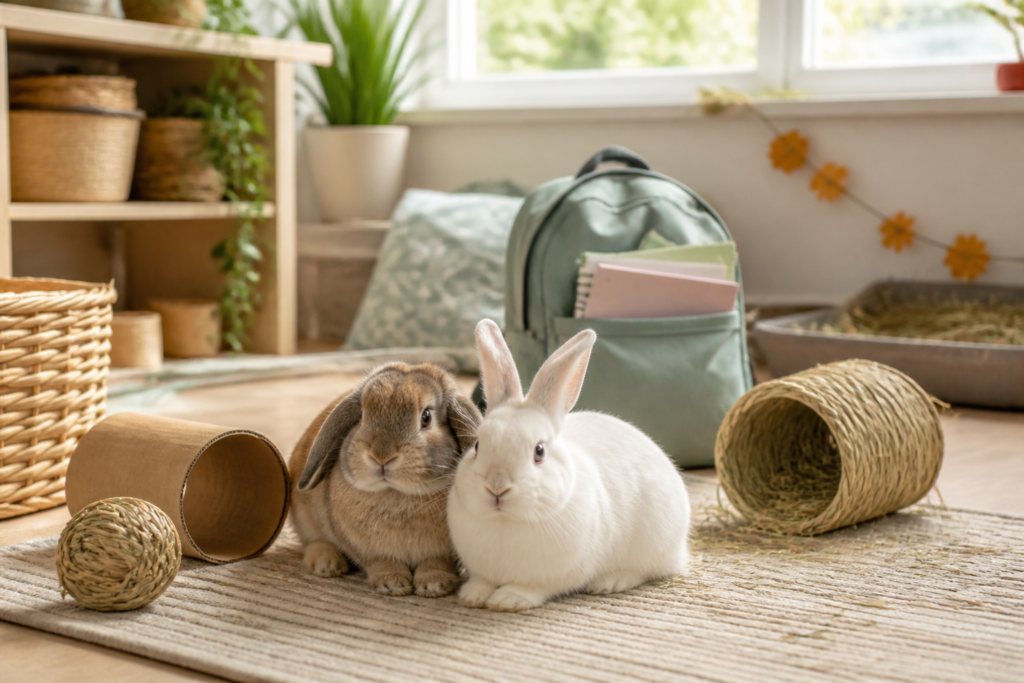
When the summer holidays start to wind down, family routines often change quite suddenly. School bags come back out, mornings get busier, and the house can feel very different from one week to the next. For rabbits, that change can be a little unsettling. 🐰💛
A steady back to school routine for rabbits can help them feel safe, comfortable, and confident as your household shifts into a new pattern. Rabbits are sensitive animals who do best with predictability, gentle handling, plenty of space, and the company of another rabbit. When their people become busier, small adjustments can make a big difference.
If your children have spent more time at home over summer, your rabbits may have become used to extra attention, different feeding times, or more noise during the day. As autumn approaches, now is a lovely time to reset things kindly.
Why routine changes can affect rabbits
Rabbits are creatures of habit. They thrive when food, cleaning, exercise, and interaction happen in a fairly consistent way. A sudden change does not always cause obvious distress, but it can lead to subtle signs that something feels “off” in their world.
This is especially true if a rabbit has relied on a child or teenager for much of their daily attention during the holidays. Once school restarts, a rabbit may spend longer periods resting alone in a quieter house, or they may miss the familiar sounds and timings they had grown used to.
A good back to school routine for rabbits is not about adding lots of extra fuss. It is about keeping the important things stable: mealtimes, hay access, companionship, enrichment, health checks, and calm interaction.
Signs your rabbit may be unsettled
Some rabbits breeze through change, while others show quieter signs that they need a bit more support. Keep an eye out for:
- being less interested in toys or normal activities
- hiding more than usual
- changes in appetite or reduced hay eating
- toileting outside usual spots
- seeming grumpy when approached
- over-grooming or seeming restless
If your rabbit stops eating, produces fewer droppings, or seems in pain, contact a rabbit-savvy vet urgently. A change in routine should never be assumed to be the only reason a rabbit seems unwell.
7 gentle ways to create a back to school routine for rabbits
1. Keep feeding times as consistent as possible
Try to keep breakfast, evening greens, and any pellet portion at roughly the same times each day. Fresh hay should always be available, of course, but predictable meal times help rabbits feel secure.
If mornings are about to become rushed, prepare the night before. Measured pellets, washed greens, and a quick hay top-up plan can stop small jobs turning into forgotten ones.
2. Make sure companionship stays at the heart of care
Rabbits should not depend on people as their main form of company. A bonded rabbit friend is essential for emotional wellbeing, especially when family members are out of the house more often. If you have a single rabbit, this seasonal change can be a useful reminder to think about safe bonding and long-term companionship.
Greatfield Small Animal Rescue often highlights just how important rabbit friendship is. If you are learning more about pairings, spend some time exploring the rabbit information on the Greatfield website too.
3. Refresh enrichment before the routine changes
A strong back to school routine for rabbits includes things to do when the house is quieter. Cardboard tunnels, safe chew items, hay-stuffed toys, dig boxes, and scattered forage can all help rabbits stay busy in healthy ways.
You do not need expensive gadgets. Often, the best enrichment is simple, rabbit-safe, and changed regularly enough to stay interesting.
4. Protect morning and evening rabbit time
Rabbits are often most active around dawn and dusk, which makes early morning and evening especially valuable for observation and gentle interaction. Even ten to fifteen minutes of calm, predictable time can help you spot changes in behaviour, appetite, or droppings.
That does not mean constant cuddling. For many rabbits, the best quality time is sitting nearby, offering forage, speaking softly, and letting them choose whether to approach. 💛
5. Keep housing clean without changing everything at once
As schedules tighten up, there can be a temptation to do one big “reset” clean and rearrange the whole setup. Try not to overhaul your rabbit’s space all at once unless there is a welfare reason to do so. Familiar scent and layout help rabbits feel settled.
Instead, stick to a sensible cleaning pattern, keep litter areas fresh, and replace worn enrichment gradually rather than all in one go.
6. Share responsibilities with adults, not just children
Children can absolutely be involved in rabbit care, but the routine should not rely on them alone. Once school, homework, clubs, and tired evenings return, it is easy for feeding, cleaning, or checks to become inconsistent if nobody else is overseeing them.
A family chart can help, but an adult should still be responsible for making sure the back to school routine for rabbits actually happens every day.
7. Build in a quick daily health check
Routine changes are a good reminder to keep welfare checks simple and regular. Each day, take a moment to notice:
- are they eating normally, especially hay?
- are droppings a normal size and amount?
- are they moving comfortably?
- do they seem bright and engaged?
- is their rear end clean and dry?
These tiny checks matter far more than a perfect-looking planner. Rabbits can become poorly very quickly, so daily observation is one of the kindest habits you can keep.
Common mistakes to avoid
- assuming rabbits will “just adapt” without support
- leaving one rabbit alone for long stretches without rabbit companionship
- letting hay, water, or cleaning routines become inconsistent
- expecting children to manage everything once school starts
- missing subtle health changes because the household is busy
If September always feels hectic in your house, it can help to simplify rabbit care tasks in advance rather than trying to do more when everyone is already stretched.
When to ask for help
If your rabbits seem withdrawn, stop eating properly, or if a bonded pair starts showing tension after a routine change, do not wait it out for too long. Speak to a rabbit-savvy vet for health concerns, and look for rabbit welfare advice if you need help with housing, bonding, or enrichment.
If you are considering offering a home to rescue rabbits, Greatfield Small Animal Rescue is also a lovely place to learn more about the needs of rabbits before you adopt.
Quick recap
A calm back to school routine for rabbits starts with consistency. Keep meals steady, protect companionship, refresh enrichment, share responsibilities sensibly, and make time for a quick daily check. Small changes done kindly can help rabbits feel secure while the family settles into a new term-time rhythm. 🐰
FAQs
Can rabbits get stressed when the school holidays end?
Yes, some can. Rabbits notice changes in noise, routine, interaction, and feeding times. Not every rabbit will show obvious stress, but a steady routine can help them adjust more comfortably.
Should children be fully responsible for rabbit care?
No. Children can help, but an adult should oversee feeding, cleaning, health checks, and veterinary decisions to make sure care stays consistent all year round.
What is the most important part of a back to school routine for rabbits?
Consistency is the big one. Reliable hay, water, mealtimes, companionship, and observation matter more than making the routine complicated.
Further reading
- Rabbit Welfare Association & Fund: The 5 Welfare Needs
- Blue Cross: Rabbit wellbeing and care
- RSPCA: Pet rabbits advice