Learning to read rat body language is one of the most rewarding parts of owning pet rats. These clever, social little animals communicate constantly through posture, movement, sound, and even their whiskers, and once you know what to look for, you will understand your rats on a whole new level. 🐀💛
Why Rat Body Language Matters
Rats are highly intelligent, socially complex animals, and understanding rat body language helps you spot both happiness and stress early. Because rats cannot tell us in words how they are feeling, their posture, movement, and small vocal cues are the main way they let us know whether they feel safe, playful, anxious, or unwell.
The RSPCA recommends observing normal rat behaviour regularly so that changes are easier to notice. Getting familiar with everyday rat body language when your rats are calm and settled makes it much easier to spot when something is off.
Signs of a Happy, Relaxed Rat
- A loose, relaxed body posture with no tension in the shoulders or spine
- Bruxing, a gentle grinding of the teeth, often paired with a relaxed body, is a classic sign of contentment
- Boggling, where the eyes appear to bulge or wobble slightly, usually happens alongside bruxing and is a strong sign your rat feels completely at ease
- Whiskers forward and gently moving as they explore
- Grooming themselves or a cage mate in a calm, unhurried way
- Approaching you willingly, sniffing hands, or climbing onto you for attention
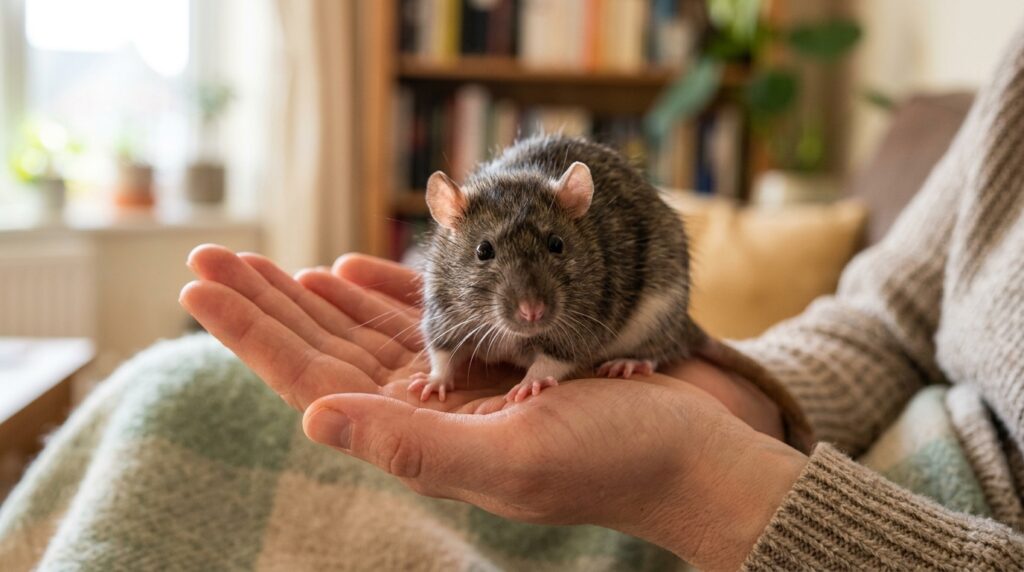
If you notice bruxing and boggling while you are handling your rat, that is a lovely sign of rat body language telling you they feel safe and comfortable with you.
Signs of Stress or Discomfort
Just as important as recognising contentment is understanding rat body language that signals stress. Look out for:
- A stiff, hunched posture with the body pulled in tight
- Tail held low and rigid, sometimes flicking sharply
- Freezing in place or flattening low to the ground
- Excessive hiding or reluctance to come out even for favourite treats
- Fast, shallow breathing or piloerection, where the fur stands on end
- Hissing, defensive posturing, or backing away repeatedly from normal handling
A single stressed moment is not usually a concern, since rats can startle just like any animal. However, if these signs of tense rat body language become the normal pattern, it is worth looking at their environment, cage mates, and routine for possible causes.
Reading Tail and Whisker Signals
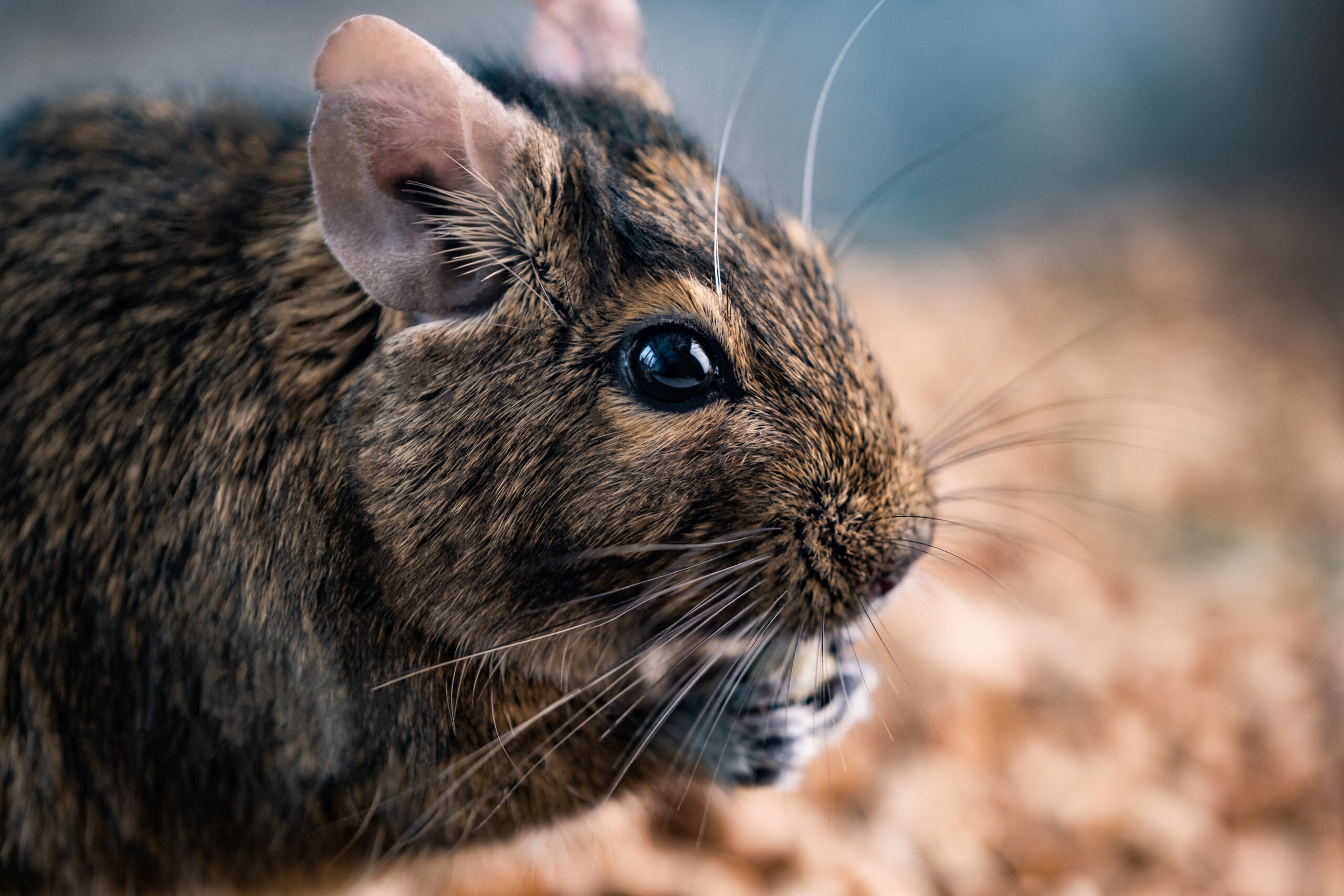
A rat’s tail and whiskers offer some of the clearest rat body language clues. A tail flicked sharply from side to side often signals irritation or overstimulation, while a loose, gently trailing tail generally suggests a calm state. Whiskers pulled back tight against the face can indicate fear or discomfort, while forward, actively moving whiskers usually mean curiosity and confidence.
Social Rat Body Language Between Cage Mates
Rats are highly social and should always be kept in same-sex pairs or small groups, never alone. Watching how rats interact with each other adds another layer to understanding rat body language. Playful wrestling, chasing, and gentle nipping are usually normal, especially if both rats take turns and there are breaks with relaxed grooming afterwards.
Signs of a genuine problem between cage mates include one rat consistently pinning another without any turn-taking, repeated squealing, or one rat constantly avoiding a particular area of the cage. If you notice this pattern, it is worth speaking to an exotics-experienced vet or an experienced rescue for advice.
Common Myths About Rat Body Language
A common myth is that rats squeaking loudly are always in pain. While a sharp squeak can indicate discomfort, rats also squeak during excited play or minor squabbles that resolve themselves quickly. Context matters just as much as the sound itself when reading rat body language accurately.
Another myth is that a rat hiding all the time is simply shy by nature. While some rats are naturally more cautious, persistent hiding is more often a sign of stress, illness, or an environment that feels unsafe, and is worth investigating rather than dismissing.
Building Trust Through Body Language Awareness
- Spend a few minutes each day simply observing your rats at rest, so you learn their normal baseline
- Approach slowly and let your rat sniff your hand before picking them up
- Reward calm, confident body language with gentle praise, treats, or a favourite scratch spot
- Respect signs of stress by giving space rather than pushing through fearful behaviour
- Keep a simple note of any unusual behaviour changes to share with a vet if needed
Quick Recap
- Rat body language includes posture, tail position, whiskers, and sounds like bruxing and boggling
- Bruxing and boggling together are strong signs of contentment
- A hunched, tense posture or persistent hiding can signal stress or discomfort
- Watching interactions between cage mates helps you understand your rats’ social dynamics
- Learning your rats’ normal baseline makes it much easier to spot changes early
The more time you spend simply watching and understanding rat body language, the closer the bond you will build with your rats. If you are thinking about welcoming a pair of rescue rats into your home, Greatfield Small Animal Rescue would love to help you find the perfect pair. 🐀
Further Reading
FAQs
What does it mean when a rat grinds its teeth?
Teeth grinding, known as bruxing, is usually a sign of contentment, especially when paired with a relaxed body and eye boggling.
Why does my rat freeze when I approach?
Freezing can be a startle response or a sign of fear. Approaching slowly and letting your rat sniff you first can help build confidence over time.
Should I be worried if my rats wrestle a lot?
Playful wrestling with turn-taking and calm breaks is normal rat social behaviour. Repeated one-sided pinning or ongoing squealing is worth monitoring more closely.