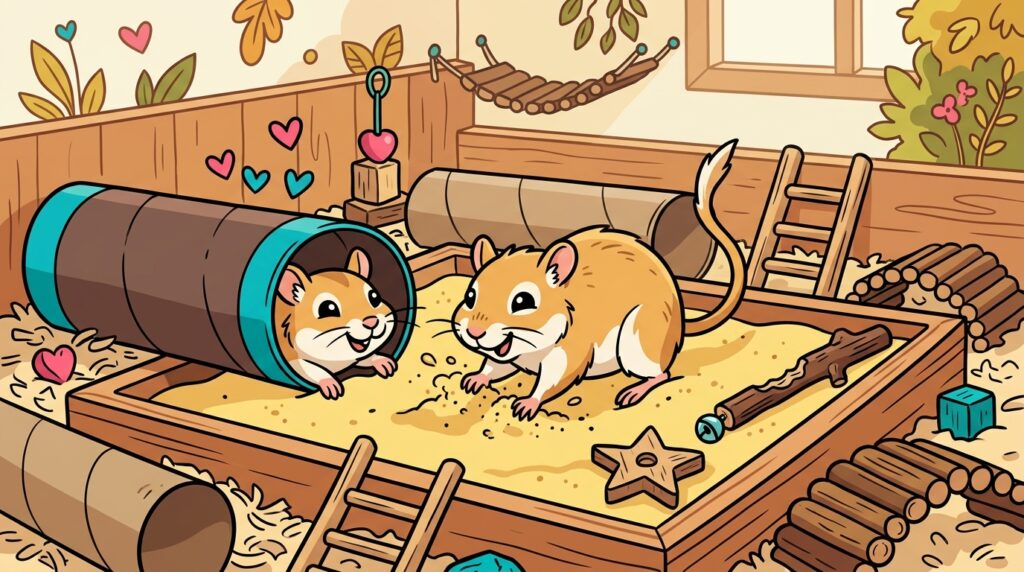
If you share your home with a gerbil (or a pair of them), you’ll already know they’re bundles of curiosity. In the wild, gerbils spend their days digging, tunnelling, foraging and exploring, so a bored gerbil in a bare cage is a stressed gerbil. The good news is that good gerbil enrichment ideas don’t need to be expensive or complicated. A few simple additions to your gerbil’s home can make a huge difference to their happiness, confidence and overall welfare. 🐹💛
Why Enrichment Matters for Gerbils
Gerbils are naturally burrowing animals. In the wild, their tunnel systems can stretch several metres and reach surprising depths, containing separate chambers for nesting, food storage and toileting. When kept as pets, gerbils still carry all those same instincts, even though their world has shrunk to the size of a tank or cage.
Without the chance to dig, gnaw, forage and explore, gerbils can become bored, stressed or even develop repetitive behaviours like bar chewing. The right gerbil enrichment ideas help satisfy these natural instincts, keeping your gerbils physically active, mentally stimulated and much less likely to develop stress-related habits.
Digging and Burrowing Opportunities
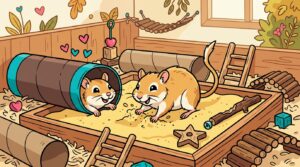
Digging is probably the single most important behaviour to provide for. A deep substrate layer, ideally at least 20 to 30cm where the cage design allows, gives gerbils the chance to create their own tunnels and burrows rather than relying on plastic tubes alone.
- Use a safe, dust-extracted burrowing substrate mix designed for gerbils
- Layer different textures, such as compacted bedding beneath looser material, so tunnels hold their shape
- Top up substrate regularly, as enthusiastic diggers move a surprising amount of it around
- Avoid substrates with added fragrance or high dust content, as these can irritate a gerbil’s respiratory system
Watching gerbils dig their own tunnel systems is genuinely one of the most rewarding parts of keeping them, and it’s one of the easiest gerbil enrichment ideas to put into practice straight away.
Sand Baths: A Daily Essential
A shallow tray of clean, fine sand (often labelled as chinchilla dust or gerbil sand) should be a permanent fixture in your gerbil’s home. Gerbils use sand baths to keep their coat clean and in good condition, but it also doubles up as a favourite form of enrichment. Watching a gerbil fling sand around with obvious enthusiasm is a good sign of a content animal.
Offer the sand bath daily rather than constantly, as gerbils can sometimes use it as a toilet area if it’s left in permanently. A ceramic or ovenproof glass dish works well, since gerbils will often try to dig underneath lighter plastic trays.
Tunnels, Tubes and Hideaways
Tunnels and tubes tap directly into a gerbil’s natural burrowing instincts, giving them safe places to dash through, hide in and explore. Cardboard tubes (from kitchen roll or wrapping paper, with any sticky tape removed) are perfect, since gerbils can chew through them and you simply replace them when they do.
- Choose tubes with a diameter of at least 5cm, so gerbils can’t become stuck
- Offer a mix of straight tubes, T-junctions and dead ends to encourage exploration
- Add wooden bridges, logs and platforms for climbing and vantage points
- Include at least one solid hideaway per gerbil, plus a shared space, so no one feels cornered
Rotating tunnel layouts every so often keeps things interesting. Gerbils are quick to map out a static environment, so rearranging tubes and hideaways periodically gives them something fresh to investigate.
Chews and Gnawing Toys
Like all rodents, gerbils have teeth that grow continuously, so regular access to safe gnawing materials is essential for both dental health and enrichment. Untreated wooden toys, willow or apple wood sticks, and cork pieces all work well.
- Willow, apple, birch, spruce or poplar wood chews
- Cork bark pieces for gnawing and hiding behind
- Plain cardboard boxes and egg cartons
- Untreated wicker balls or mats
Avoid anything treated with paint, varnish or glue, and steer clear of soft woods that splinter easily. Offering a rotating supply of chew items also gives gerbils something new to gnaw on, keeping this important instinct satisfied.
Foraging and Scatter Feeding
In the wild, gerbils spend a large part of their day searching for food, and they naturally hoard what they find. Scatter feeding, rather than simply filling a bowl, gives gerbils a job to do and helps prevent boredom.
- Scatter a portion of daily food across the substrate so gerbils have to search for it
- Hide small amounts of seed mix inside cardboard tubes or paper bags
- Use simple puzzle feeders designed for small rodents
- Bury treats slightly under the surface to encourage digging for food
This kind of foraging enrichment is one of the simplest gerbil enrichment ideas to introduce, and it costs nothing beyond a little extra thought at feeding time.
Common Mistakes to Avoid
- Using an exercise wheel that’s too small, causing an arched back and sore feet, rather than one large enough for a straight spine
- Choosing tubes or tunnels narrower than 5cm, risking gerbils becoming stuck
- Leaving sand baths in permanently, which can encourage toileting in the sand
- Keeping a single gerbil alone, since they are highly social and thrive living with same-sex pairs or small groups
- Forgetting to check new wooden or cardboard items for glue, staples or sticky tape before adding them
Quick Recap
Good gerbil enrichment ideas come down to letting gerbils be gerbils: plenty of depth to dig in, a daily sand bath, a network of tunnels and hideaways, safe things to gnaw, and food they have to search for. None of this needs to be expensive, and small changes made regularly will keep your gerbils busy, confident and thriving.
If you’re thinking about welcoming gerbils into your home, or you’d like to support the small animals currently in our care, do take a look around the Greatfield Small Animal Rescue website. Every bit of interest, adoption enquiry or share helps us help more animals find loving homes. 🐾
Further Reading
- RSPCA: Creating a Good Home for Gerbils
- RSPCA: Gerbil Behaviour and Body Language
- RSPCA: Caring for Your Pet Gerbils
FAQs
How much substrate do gerbils need for burrowing?
Where the cage design allows, aim for at least 20 to 30cm of safe, dust-extracted substrate so gerbils can dig proper tunnels rather than shallow scrapes.
How often should I offer a sand bath?
Most owners offer a sand bath daily for a set period rather than leaving it in the cage permanently, which helps keep it clean and prevents it being used as a toilet area.
Can gerbils live alone?
Gerbils are highly social and generally do best living in same-sex pairs or small groups from a young age, rather than alone.