
When the weather turns warm, many people start asking whether small pets in sheds are safe and comfortable. It is an important question, because a normal garden shed can heat up surprisingly fast. For rabbits, guinea pigs and some other small animals, that can quickly become dangerous. 🐰☀️
The kindest answer is this: an ordinary shed is not a safe place for small pets in summer. A properly converted outbuilding can work for some species, but only if it is spacious, well ventilated, shaded, secure and checked closely during hot weather. Rescue animals need comfort, stability and careful monitoring, not a building that traps heat.
Why this matters so much in hot weather
Small animals do not cool themselves as efficiently as many people realise. Rabbits and guinea pigs are especially vulnerable to overheating, and signs of distress can develop faster than owners expect. A shed may feel acceptable in the morning, then become stuffy, airless and far too warm by early afternoon.
That is why conversations about small pets in sheds should never focus only on shelter from rain. Summer welfare is about airflow, shade, insulation, temperature stability, clean water and the ability to move pets somewhere cooler when needed. 💛
What makes a normal shed risky?
A standard garden shed is usually built for tools, not living animals. Timber walls absorb warmth, the roof can trap heat, and many sheds have poor ventilation. Once doors and windows are closed for security, the inside can become hot and stale very quickly.
- Direct sun moves during the day, so a shaded shed in the morning may be in full sun later on.
- Warm air can build up inside even when the outdoor temperature does not seem extreme.
- Closed spaces can become humid as well as hot, which makes cooling harder.
- Some pets may hide signs of discomfort until they are already unwell.
If you are worrying about small pets in sheds, trust that instinct. It is far better to review the set-up early than to hope the building stays cool enough.
Can any shed set-up be safe?
Sometimes, yes, but only when the shed has been properly converted into animal housing rather than used as a shed in the usual sense. This is most often discussed for rabbits or guinea pigs, and even then it should be approached thoughtfully.
A safer converted set-up usually includes mesh-protected ventilation, an inner door that allows airflow while keeping pets secure, generous floor space, deep shade, weather protection, and daily monitoring of indoor conditions. It should also allow easy access to an attached run or exercise area where the animals can choose cooler spots.
In other words, the question is not just whether you can keep small pets in sheds. The real question is whether the building has been transformed into a suitable living environment. For many pets, especially in a heatwave, a cool indoor room may still be the safer choice.
Summer checks for rabbits, guinea pigs and other small pets
- Check shade repeatedly. The sun shifts, so look at the set-up more than once across the day.
- Prioritise airflow. Fresh air needs to move through the space without creating escape routes or predator risks.
- Offer plenty of water. Use clean bowls and check them often in warm weather.
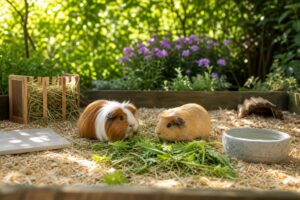
- Create cool resting options. Wrapped frozen bottles beside resting areas, cool tiles and shaded dig boxes can help.
- Groom where appropriate. Loose fur can make warm conditions harder to cope with.
- Watch the warmest hours closely. If conditions are becoming stuffy or uncomfortable for you, they are likely too warm for your pet as well.
These steps matter whether your pets live outdoors full time or only spend part of the day in an outbuilding. They are especially important for older animals, long-haired pets, overweight pets and anyone with existing health issues.
When should pets be moved indoors?
If the shed is holding heat, feels airless, or cannot stay comfortably cool, move your pets without delay. This is not overreacting. It is sensible summer care.
A cooler indoor room can be a very helpful short-term plan during hot spells. Keep the space calm, quiet and secure. Avoid sudden changes that create stress, but do not leave pets in a risky environment just to preserve routine.
For some people, concern about moving pets comes from not wanting to upset them. That is understandable. But when it comes to small pets in sheds, temperature safety must come first.
Signs a pet may be overheating
Overheating can become an emergency. Warning signs can include lethargy, breathing changes, weakness, reluctance to move, or a pet seeming unusually floppy or distressed. Rabbits and guinea pigs may deteriorate quickly.
If you think your pet may be suffering from heat-related illness, move them to a cool shaded place, begin gentle cooling with a cool damp towel if appropriate, and contact a vet straight away. Do not wait to see if they improve on their own.
Common mistakes to avoid
- Assuming a shed is fine because the outdoor temperature does not seem extreme.
- Checking only once in the morning.
- Relying on one tiny window for ventilation.
- Leaving water bottles where leaks could soak bedding or where pets cannot choose to move away.
- Thinking a pet is coping because they are sitting quietly.
These mistakes are very common, and they do not make someone a bad owner. They simply show why shared welfare advice matters. A small change today could prevent real suffering tomorrow.
Quick recap
- A normal shed is usually not safe for small pets during summer.
- A converted outbuilding may work for some rabbits or guinea pigs, but only with excellent ventilation, shade, space and monitoring.
- Heat can build up quickly, even on days that do not feel dramatic.
- If in doubt, move pets to a cooler area and ask your vet for advice.
FAQ
Can rabbits live in a shed in summer?
Only if the building has been properly converted for rabbits, with strong ventilation, shade, space and careful daily checks. A standard closed shed is not a safe rabbit set-up in hot weather.
Are guinea pigs safe in a shed when it is hot?
Guinea pigs can also struggle in the heat. If their housing is warming up, poorly ventilated or catching the sun, it needs to be changed quickly. Some guinea pigs may need a cooler indoor room during hot spells.
What about hamsters, gerbils, rats and mice?
These species can be very sensitive to temperature swings too. Outbuildings and sheds often create unstable conditions, so careful species-specific housing and close summer monitoring are essential.
Further reading
- RSPCA: Keeping Rabbits & Rodents Cool in Summer
- Woodgreen Pets Charity: How to care for your rabbits in hot weather
- Woodgreen Pets Charity: Converting a shed for guinea pigs
If you would like more kind small pet advice, or you are thinking about adoption, explore Greatfield Small Animal Rescue’s website and share this post with someone who may be planning a summer set-up. Every thoughtful change helps keep small pets safer. 🐹💛