A good rabbit diet can feel confusing at first. Pet shop shelves are full of bright bags, treat sticks, mixes, bowls, supplements and snacks, all promising happy rabbits. Then you hear that hay should be the main thing, carrots are treats, muesli is best avoided, and pellets need measuring. No wonder people feel unsure. 🐰💛
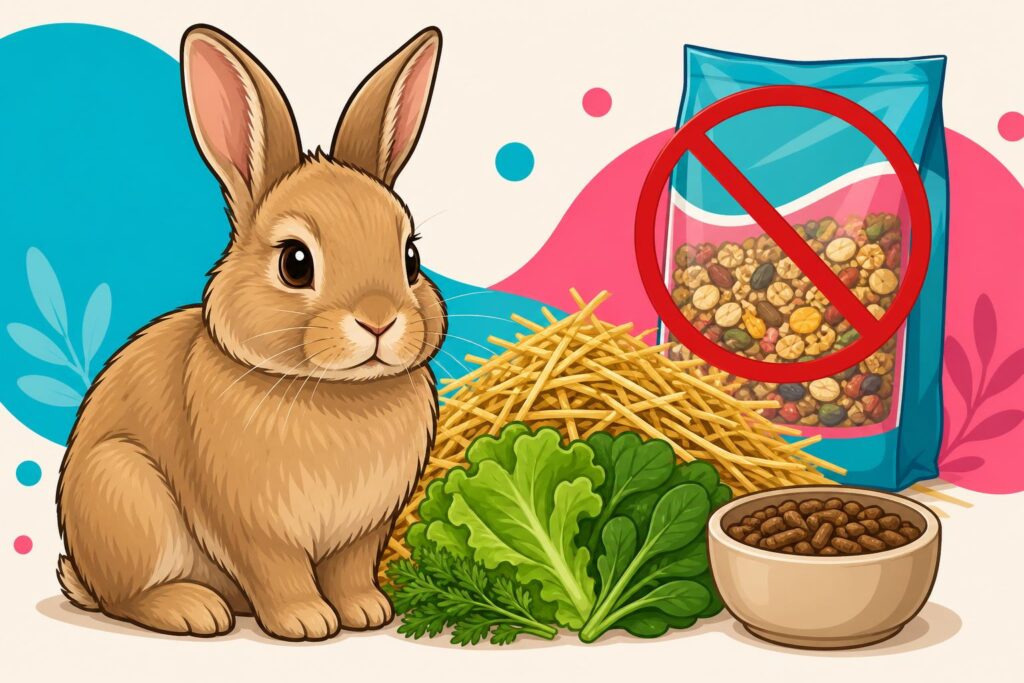
This rabbit diet guide is here to make things calmer. The kindest approach is usually very simple: lots of good hay, a small measured amount of suitable pellets, safe leafy greens, clean water and only tiny occasional treats.
Rabbits are not designed to live on colourful mixes or snack foods. Their teeth grow constantly, their digestive system needs fibre moving through it, and small changes in eating or droppings can matter quickly. Feeding well is one of the most loving daily things we can do for them.
Why hay is the heart of a healthy rabbit diet
Hay should be the biggest part of a rabbit diet guide because it does the most important jobs. Rabbits need long fibre to keep their gut moving properly, and chewing hay helps wear down their continuously growing teeth.
The Rabbit Welfare Association & Fund advises unlimited hay, with a useful guide of at least each rabbit’s own body size in fresh hay every day. That is a lovely practical image: if your rabbit is a little loaf, they need a little loaf-sized pile of fresh hay available daily, often more.
Hay should be fresh, sweet-smelling and dry, not dusty, mouldy or damp. Many rabbits enjoy variety, so you might offer different types of feeding hay or safe dried forage to encourage natural grazing. Hay racks, litter trays with hay above or beside them, cardboard boxes and forage toys can all make hay more interesting.
Pellets are useful, but they should not take over
Pellets can be part of a healthy rabbit diet, but they are not the main meal. Think of them as a measured feed balancer rather than a full bowl to graze on all day.
Choose a good quality rabbit pellet or nugget, ideally high in fibre and without colourful bits, seeds, nuts or sugary extras. Muesli-style mixes encourage selective feeding, where rabbits pick out the tastiest parts and leave the healthier pieces behind. Over time, that can contribute to dental, digestive and weight problems.
The right amount depends on your rabbit’s size, age, weight, health and vet advice. For many adult rabbits, pellets are a small daily portion, not a heaped bowl. If your rabbit is overweight, underweight, elderly, young, pregnant, nursing or unwell, please ask a rabbit-savvy vet for individual guidance.
Fresh greens add variety and enrichment
Safe leafy greens can be a lovely part of a rabbit diet guide. They add moisture, flavour, enrichment and extra nutrients. Good options may include herbs and leafy foods such as coriander, parsley, basil, mint, romaine lettuce, spring greens and other rabbit-safe choices.
Introduce new greens slowly, one at a time, and watch your rabbit’s droppings and appetite. Sudden diet changes can upset sensitive tummies. Wash fresh food well, remove anything wilted or spoiled, and avoid feeding lawn clippings because they ferment quickly and can be dangerous.
A varied little salad can be a useful enrichment moment too. Scatter feeding, hiding leaves in hay, or offering safe forage encourages rabbits to move, sniff and search rather than simply eating from a bowl.
Treats should be tiny and occasional
Rabbits do not need sugary treats, yoghurt drops, seed bars or big chunks of fruit. They may love them, but liking something does not mean it is good for them. We can all relate to that one.
Carrot is a treat, not a daily staple. Fruit should also be very limited because it is high in sugar. If you use treats for bonding or training, keep them tiny and choose rabbit-safe options. Often, a little sprig of herb, a favourite leaf or a few pellets taken from the daily allowance works beautifully.
Water matters every single day
Fresh water should always be available. Some rabbits prefer a heavy bowl, some use a bottle, and many homes offer both. Bowls allow a natural drinking position, but they need checking because bedding or hay can get kicked in. Bottles need checking too because spouts can block or leak.
A simple daily habit is to refresh water, check the container is clean, and notice whether your rabbit is drinking much more or much less than usual. Changes in drinking, eating or droppings are worth taking seriously.
What healthy eating habits look like
A rabbit who is eating well should be spending lots of time nibbling hay. Their droppings should usually be plentiful, round and fairly consistent. Their appetite should be steady, and they should show interest in favourite foods.
If a rabbit stops eating, eats much less, produces fewer droppings, has diarrhoea, seems hunched, quiet or uncomfortable, please contact a vet urgently. Rabbits can become very poorly quickly when their gut slows down. Waiting overnight can be risky.
Common rabbit diet mistakes
- Filling a bowl with muesli mix and letting rabbits pick their favourite bits.
- Giving too many pellets so the rabbit eats less hay.
- Treating carrots and fruit as daily foods rather than occasional treats.
- Changing foods suddenly instead of introducing them slowly.
- Assuming a rabbit is fine because they ate a treat, even if they are refusing hay.
- Forgetting that dental pain can make rabbits selective or reluctant to eat.
Quick recap
The simplest rabbit diet guide is this: unlimited fresh hay, clean water, a small measured amount of suitable pellets, safe leafy greens and very limited treats. Avoid muesli mixes, keep sugary foods rare, and make hay the main event every day.
If you are preparing to adopt rabbits, this is a wonderful thing to learn before they arrive. Good feeding habits help protect teeth, digestion, weight and overall welfare, and they give rabbits more of the natural grazing time they need.
If you would like to support rescue rabbits or learn more before adopting, please explore Greatfield Small Animal Rescue and share this guide with someone who loves rabbits 🐰💛
FAQs
Can rabbits eat carrots every day?
Carrots are high in sugar, so they are best treated as a tiny occasional treat rather than a daily food.
Is muesli mix good for rabbits?
Muesli-style mixes are best avoided because they encourage selective feeding. A plain, good quality rabbit pellet is usually a better choice when fed in the right amount.
How much hay should rabbits eat?
Rabbits should have unlimited access to fresh hay. A helpful minimum guide is at least their own body size in hay every day.
When should I call a vet about my rabbit’s eating?
Call a vet urgently if your rabbit stops eating, eats much less, produces fewer droppings, has diarrhoea, seems hunched, quiet or uncomfortable.