If you have ever brought home a single guinea pig, you may have wondered whether they are lonely. The honest answer is usually yes. Guinea pigs are highly social little animals and, in the wild, they live in groups. Bonding guinea pigs so they have a companion is one of the kindest things you can do for their wellbeing 🐾💛
At Greatfield Small Animal Rescue, we regularly see guinea pigs surrendered on their own after losing a friend, or bought as “just one” without realising how much they crave company. This guide walks you gently through bonding guinea pigs safely, step by step, so you can give your piggy the friendship they need.
Why Bonding Guinea Pigs Matters
Guinea pigs are herd animals. Left alone, even with plenty of human attention, many become withdrawn, less active, or anxious. A bonded pair or small group will groom each other, forage together, and settle much more confidently into new surroundings.
Bonding guinea pigs is not just a nice extra. Welfare organisations including the RSPCA and Blue Cross recommend that guinea pigs live with at least one companion wherever possible, ideally from the same species. A single guinea pig should never be assumed to be content simply because they are eating and drinking normally.
The safest and calmest combinations are usually two females, or a neutered male with one or more females. Two unneutered males can sometimes live together happily, but this is more variable and worth discussing with your vet or a rescue like ours before committing.
Step-by-Step: How to Bond Guinea Pigs Safely
1. Choose neutral territory
Never introduce a new guinea pig directly into an existing pig’s established home. That space already smells like “theirs” and disputes are far more likely. Instead, set up a completely new, thoroughly cleaned space that neither guinea pig has used before, with fresh bedding, hides, and hay.
2. Keep first sessions short and calm
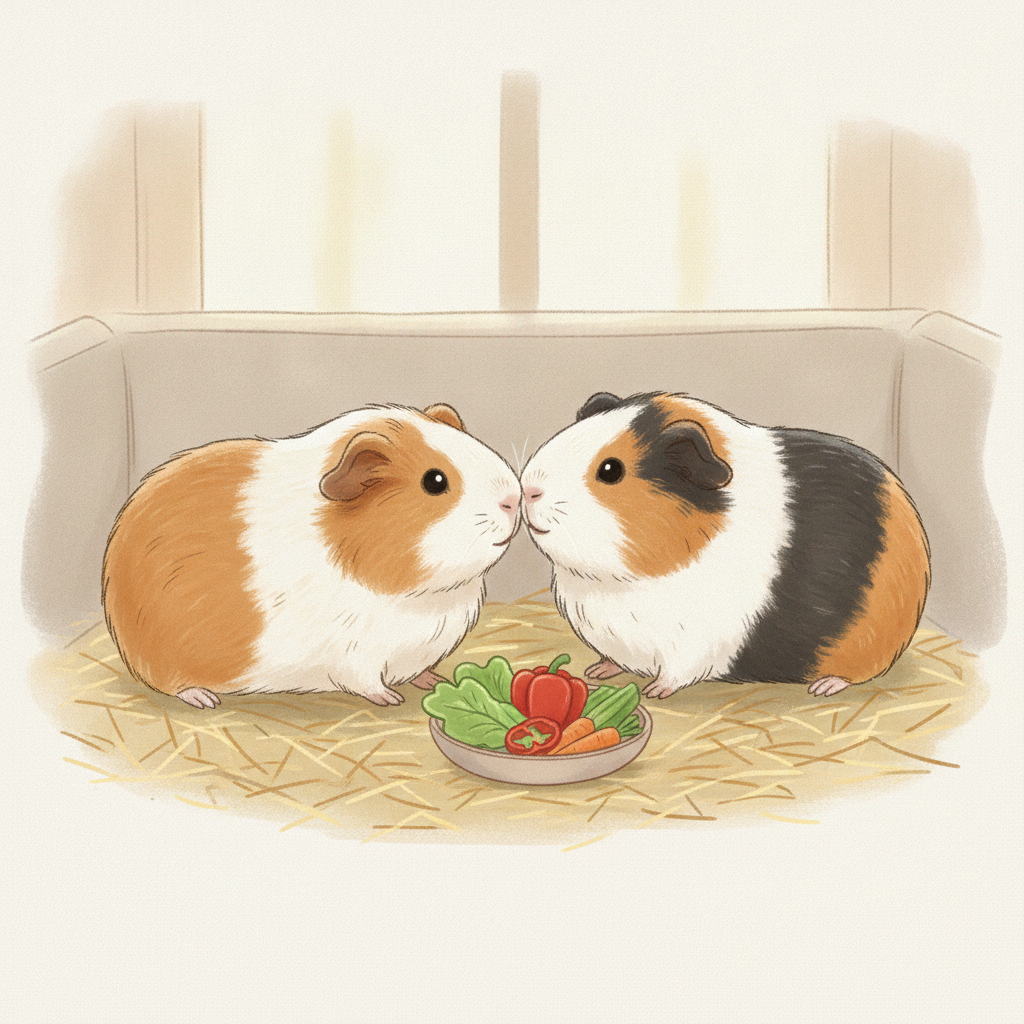
Start with short supervised sessions of 10 to 15 minutes in the neutral space. Scatter feed some hay and a few veggies across the area so both piggies have something calming to focus on other than each other.
3. Learn the body language
Some rumbling, gentle chasing, and mounting is normal as they work out who is who. This usually settles within the first session or two. Watch closely for signs that things are tipping into real conflict, such as raised fur along the back, teeth chattering, lunging, or biting that draws blood. If this happens, calmly separate them using a towel or thick glove rather than bare hands, and try again another day with shorter, calmer sessions.
4. Gradually increase time together
If sessions are going well, gradually extend how long they spend together over several days. Look for positive signs such as both pigs relaxing, eating side by side, or lying near each other.
5. Move to full-time living together
Once several sessions have gone smoothly, you can move them into their permanent shared home. It is still worth giving them plenty of space, more than one hideout each so nobody feels cornered, and multiple food and water points to reduce any competition.
Common Mistakes When Bonding Guinea Pigs
- Introducing pigs in one pig’s existing home rather than neutral territory
- Rushing the process because the first session looked fine
- Assuming a single hutch of any size is enough space for two bonded pigs
- Only providing one hideout, which can cause resource guarding
- Giving up after the first sign of rumbling or minor chasing, which is often completely normal
- Pairing an unneutered male with a female without planning for neutering first
Welfare Advice for a Successful Bond
Always supervise introductions fully and never leave two unfamiliar guinea pigs alone together until you are confident they are settled. Keep sessions calm, quiet, and free from other pets or loud noises.
If you are bonding guinea pigs of different sexes, speak to your vet about neutering before introductions begin, both for safety and to prevent unplanned litters. Bonding guinea pigs is also easier when both pigs are in good health, so a quick vet check beforehand is always sensible, especially if either pig is elderly or has any ongoing health conditions.
If a bond genuinely does not work despite patient, repeated attempts, that is okay. Some personalities simply do not suit each other, and a good rescue can help you find a more compatible match rather than leaving a guinea pig without company at all.
If you are considering welcoming a guinea pig into your home, or you already have a single piggy who needs a friend, do explore the Greatfield Small Animal Rescue website. We often have bonded pairs or compatible guinea pigs ready to meet, and our team is always happy to talk through bonding guinea pigs safely before you commit to introductions at home.
Quick Recap
- Guinea pigs are social animals and do best with a compatible companion
- Always introduce guinea pigs on neutral territory, never in an existing pig’s home
- Keep early sessions short, calm, and supervised
- Some rumbling and gentle chasing is normal, but watch for real aggression
- Increase time together gradually before moving to a permanent shared home
- Speak to your vet about neutering before bonding pigs of different sexes
Thinking about adopting a guinea pig, or looking for a friend for your own piggy? 🐾 Get in touch with Greatfield Small Animal Rescue, share this guide with a fellow guinea pig owner, or consider supporting our work so more small pets can find loving, bonded homes.
Further Reading
FAQs
How long does bonding guinea pigs usually take?
Every pair is different. Some guinea pigs settle within a few short sessions over a couple of days, while others need a week or more of gradual, patient introductions.
Can I bond a guinea pig with a rabbit instead?
This is generally discouraged by welfare organisations. Rabbits and guinea pigs communicate differently, have different dietary needs, and rabbits can accidentally injure a guinea pig. Same-species companionship is always the safer, kinder choice.
What if my guinea pigs never seem to fully bond?
If patient, repeated attempts at bonding guinea pigs are not working, speak to an experienced rescue or your vet. Sometimes a different pairing is simply a better match, and that is a completely normal part of finding the right fit.