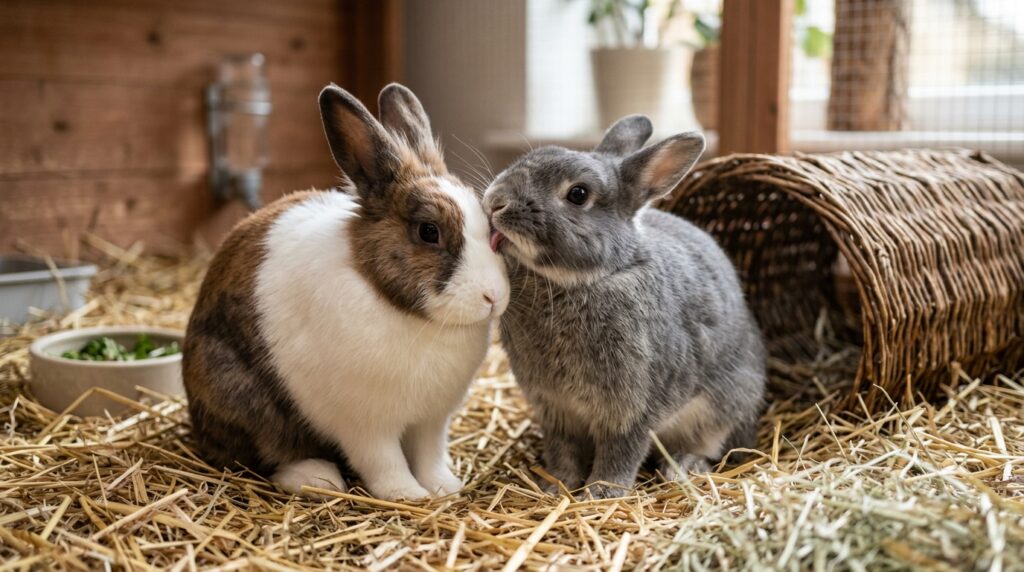
If you have ever wondered whether your rabbit is lonely, the honest answer is very likely yes. Rabbit companionship is one of the most important welfare needs for pet rabbits, yet it is still one of the most overlooked. Many rabbits in the UK are still kept alone, often with the best intentions, but the science and the welfare guidance are clear. Rabbits are deeply social animals and thrive best living with a bonded friend. 🐰💛
Why Rabbit Companionship Matters So Much
In the wild, rabbits live in large social groups underground. They groom each other, sleep huddled together, and communicate constantly through body language and scent. A pet rabbit has not lost any of that instinct just because they live in a hutch or a house. Rabbit companionship is not a nice extra, it is a genuine welfare requirement.
The Rabbit Welfare Association and Fund (RWAF) and the RSPCA both recommend that rabbits are kept in bonded pairs or small groups wherever possible. Studies referenced by RWAF have found that rabbits value the company of another rabbit as much as they value food, which says a lot about how central rabbit companionship is to their wellbeing.
Signs Your Rabbit May Be Lonely
A rabbit living without proper companionship will not always show it in obvious ways. Some signs that a lack of rabbit companionship may be affecting your pet include:
- Excessive grooming of a favourite toy, blanket, or even a mirror
- Low activity levels or spending long periods hiding
- Overeating or under eating compared to their usual habits
- Increased destructive chewing or digging out of frustration
- A noticeable brightening in mood when a person spends time with them, which can hint at how much they crave company
None of these signs mean you have done anything wrong. Many rabbits end up living alone simply because they were rehomed as a single pet, or because a bonded partner sadly passed away. The good news is that rabbit companionship can usually be restored with patience and the right approach.
What Good Rabbit Companionship Looks Like
The gold standard recommended by welfare charities is a neutered male and neutered female pair, since this combination tends to bond most easily and stay stable long term. Same-sex pairs and small groups can also work well, but they often need more careful introductions and ongoing monitoring, especially between two males.
Neutering is essential for successful rabbit companionship. Unneutered rabbits are far more likely to fight, to show frustrated or aggressive behaviour, and of course to breed. Neutering also protects female rabbits from the very high risk of uterine cancer, so it supports both bonding and long term health.
Step by Step: Introducing Rabbits Safely
- Make sure both rabbits are neutered and fully recovered from surgery, usually a minimum of a few weeks
- Start with scent swapping, such as swapping bedding or toys between their separate spaces
- Introduce them on neutral territory neither rabbit has claimed as their own
- Keep first meetings short and calm, watching closely for signs of stress
- Gradually increase time together over several days or weeks, always supervised at first
- Provide plenty of space, hideouts, and separate food and water points during the settling in period so nobody feels cornered
Some minor squabbling, chasing, or a bit of fur pulling during introductions can be normal rabbit companionship negotiation as they establish who is who. However, any drawing of blood, repeated cornering, or one rabbit constantly hiding in fear means you should separate them and try a slower approach, ideally with support from a rescue or rabbit-savvy vet.
Common Myths About Rabbit Companionship
One persistent myth is that a rabbit will be perfectly happy as long as their human spends plenty of time with them. Human company is wonderful and rabbits do bond closely with their carers, but it cannot fully replace rabbit companionship from another rabbit. Rabbits communicate in ways, such as through scent and body posture, that only make full sense to another rabbit.
Another myth is that introducing a second rabbit will always cause fighting. With proper neutering, a sensible introduction process, and patience, the vast majority of rabbits can be successfully bonded, even those who have previously lived alone for years.
When Solo Rabbit Care Is Genuinely Unavoidable
Occasionally, due to a rabbit’s health, temperament, or circumstances, living alone may be unavoidable for a period. In these cases, rabbit companionship needs do not disappear, they simply need to be met differently. This means significantly more daily interaction time, environmental enrichment, foraging opportunities, and ideally supervised time near other rabbits, even through a secure barrier, so your rabbit still has some social stimulation.
Quick Recap
- Rabbit companionship is a genuine welfare need, not a luxury
- Neutered male and female pairs tend to bond most easily
- Slow, supervised introductions on neutral territory give the best chance of success
- Lonely rabbits can show subtle signs of stress that are easy to miss
- Solo rabbits need extra enrichment and interaction to help fill the gap
If you have a single rabbit at home and think they might benefit from a bonded friend, Greatfield Small Animal Rescue is always happy to help with advice on introductions, or to help you find a suitable rescue rabbit looking for their own happy ending. Every bonded pair we help create is a step towards a happier, healthier rabbit. 🐰
Further Reading
- Rabbit Welfare Association and Fund: Companionship
- RSPCA Advice and Welfare
- Blue Cross Rabbit Wellbeing and Care
FAQs
Can two male rabbits live together?
Yes, with both neutered and a careful introduction, but male pairs can sometimes need more ongoing monitoring than a male and female pair.
How long does bonding usually take?
Some rabbits bond within days, others take several weeks. Patience and gradual introductions give the best long term results.
Will a guinea pig make a suitable companion instead of another rabbit?
No, rabbits and guinea pigs have different social, dietary, and communication needs, and are not recommended to be housed together as companions.