If you have guinea pigs at home, or you’re thinking about welcoming some into your family, one of the most important things you can do for them is get their diet right. Guinea pig diet is more nuanced than many people realise — and a few common misconceptions can lead to real health problems over time. 🐾
The good news is that feeding guinea pigs well isn’t complicated once you understand what they actually need. This guide walks you through everything: the essentials, the extras, what to avoid, and why vitamin C matters more for guinea pigs than for most other small animals.
The foundation: unlimited hay
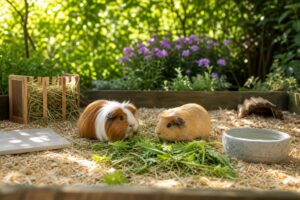
The most important part of any guinea pig diet is hay — and it should be available at all times, without restriction. Hay should make up around 70 to 80 percent of what your guinea pigs eat every day. Not as an occasional treat, not as bedding to be ignored, but as the main component of their diet.
Hay does several vital things at once. It provides the long-strand fibre that keeps guinea pig digestive systems moving correctly. It wears their continuously growing teeth down naturally, which helps prevent dental problems. It gives them something to forage through and chew, which supports their mental wellbeing. And it keeps their gut microbiome healthy.
Timothy hay is the gold standard for adult guinea pigs — it has a good balance of fibre and nutrients. Meadow hay and orchard grass hay are also excellent choices. Avoid feeding alfalfa hay as the main hay for adult guinea pigs, as it is too high in calcium. Alfalfa can be given in small amounts to young guinea pigs (under six months) or those who need to gain weight, but Timothy or meadow hay is the everyday choice for most. 💛
Keep hay in a rack or pile where your guinea pigs can always access it. Replace it daily with fresh hay to keep it clean and appetising.
Vitamin C: the critical need
Here’s one of the most important facts about guinea pig diet: guinea pigs cannot produce their own vitamin C. Unlike most mammals, they lack the enzyme needed to synthesise it internally, which means they must get every bit of their vitamin C from what they eat.
Without enough vitamin C, guinea pigs develop scurvy — a painful condition that causes swollen joints, lethargy, loss of appetite, poor coat condition, and in serious cases, internal bleeding and death. Scurvy is entirely preventable with the right diet, which is why fresh vitamin C-rich vegetables are not a luxury but a daily necessity.
Good vitamin C sources for guinea pigs include:
- Red and green peppers — some of the best sources of vitamin C, and most guinea pigs love them
- Kale — a great leafy green, offer a few times a week
- Parsley — high in vitamin C, offer in moderation
- Romaine lettuce — a good daily staple
- Broccoli — including the stalks; offer a couple of times a week
Do not rely on vitamin C supplements added to water, as vitamin C breaks down rapidly in water and the amount your guinea pig actually receives is unreliable. Fresh vegetables are the safest and most effective way to meet their daily needs.
Fresh leafy greens: daily and varied
Alongside hay, fresh leafy greens and vegetables should be offered every day as part of a balanced guinea pig diet. Aim for a small handful of fresh greens per guinea pig, once or twice daily.
Variety matters here. Rotating different greens throughout the week ensures your guinea pigs get a broader range of nutrients and reduces the risk of too much of any one thing building up in their system. A good daily mix might include romaine lettuce or similar leafy greens, a small piece of pepper, and some fresh herbs.
Safe leafy greens and vegetables for guinea pigs include:
- Romaine lettuce and cos lettuce (avoid iceberg lettuce — too watery, low in nutrition)
- Red and green peppers (these are excellent vitamin C sources)
- Cucumber (high water content — good on warm days but not as a main vegetable)
- Courgette
- Celery (cut into short pieces to avoid the strings being a choking risk)
- Fresh herbs: basil, dill, coriander, parsley (in moderation)
- Kale and cavolo nero (offer a few times a week, not daily)
- Broccoli and broccoli leaves
- Spinach (offer once or twice a week only, due to oxalic acid content)
Always wash fresh vegetables thoroughly before offering them, and remove any uneaten fresh food after a couple of hours to prevent it from going off in the hutch. 💛
Pellets: a small but useful addition
A small amount of guinea pig pellets can form part of a balanced guinea pig diet, but they should never be the foundation of it. The PFMA (Pet Food Manufacturers’ Association) guidance supports feeding a small daily ration of guinea pig-specific pellets as a way of ensuring consistent nutrition alongside hay and fresh food.
A tablespoon or two of plain, pellet-style guinea pig food per animal per day is generally sufficient. Choose pellets rather than muesli-style mixes: guinea pigs will pick out the bits they like (usually the sweet, sugary pieces) and leave the rest, leading to an unbalanced diet. Pellets ensure they eat the whole ration.
Look for a pellet that lists hay or grass as a main ingredient and does not contain added sugar or artificial colours.
What to avoid in a guinea pig diet
Some foods that might seem harmless are actually unsafe for guinea pigs. Here’s what to leave out of their diet entirely:
- Onions, garlic, leeks, and chives — toxic to guinea pigs
- Potatoes — especially raw or green potatoes, which are toxic
- Rhubarb — toxic
- Grapes and raisins — toxic
- Avocado — toxic
- Mushrooms — potentially harmful
- Iceberg lettuce — not toxic but very watery and low in nutrients; can cause loose stools
- Meat, dairy, or eggs — guinea pigs are herbivores and cannot digest animal products
- Processed human foods — biscuits, bread, cereals, sweets, or anything containing salt, sugar, or additives
If you’re ever unsure whether a food is safe, it’s better not to offer it until you’ve checked with a reliable source. The Blue Cross and RSPCA both have helpful food guides for guinea pig owners. 🐾
Treats: what’s safe and what to limit
Guinea pigs tend to adore fruit — but fruit should only ever be offered as an occasional treat due to its natural sugar content. A small piece of apple (without seeds), a strawberry, or a slice of melon once or twice a week is plenty. Citrus fruits like orange can be given in very small amounts and do provide vitamin C, but the acidity means they shouldn’t be a daily feature.
Commercial guinea pig treats from pet shops are often high in sugar and low in nutritional value. A slice of fresh pepper or a sprig of fresh herbs makes a much healthier and more genuinely appreciated treat for most guinea pigs.
Fresh water, always
Fresh, clean water should be available at all times. Most guinea pigs prefer a water bottle to a bowl (bowls tip over easily and can get contaminated with bedding), but some individuals prefer a bowl — watch your guinea pigs and provide what works for them.
Check and refresh the water every day. On warm days, guinea pigs will drink more, so keep a close eye on the supply. Clean the water bottle or bowl at least twice a week to prevent algae and bacteria building up.
Building a balanced daily routine
A healthy daily guinea pig diet looks something like this:
- Unlimited hay — always available, refreshed daily
- Fresh leafy greens — a good handful per guinea pig, once or twice a day. Include a pepper or another vitamin C-rich vegetable
- A small ration of pellets — one to two tablespoons per guinea pig per day
- Fresh water — changed daily
- Occasional treats — a small piece of fruit or vegetable treat a couple of times a week
This simple routine, followed consistently, gives your guinea pigs the best possible nutritional foundation and significantly reduces the risk of common health problems including dental disease, digestive issues, and scurvy. 💛
Quick recap
A healthy guinea pig diet is built on unlimited hay, with fresh vitamin C-rich vegetables every day and a small daily ration of good-quality pellets. Avoid muesli mixes, limit sugary treats, and never feed toxic foods like onions, grapes, or rhubarb. Fresh water should always be available. Get the basics right and your guinea pigs will thrive.
If you have questions about your guinea pigs’ nutrition, or if you’re thinking about adopting guinea pigs and want to be sure you’re prepared, do get in touch with us at Greatfield Small Animal Rescue. We’re here to help. 🐾
Further reading
- RSPCA guinea pig advice — welfare guidance including feeding and nutrition
- Blue Cross guinea pig care — practical guides including diet and health
- PFMA pet nutrition guidance — industry-led advice on pet feeding