When the weather warms up, many small pets need a little extra help to stay comfortable. Degus are especially sensitive to heat, so summer care is not just about convenience, it is a genuine welfare issue. 🐭☀️
If you share your home with degus, a few calm, practical changes can make a big difference. This guide covers degu hot weather care in a kind, realistic way, with simple steps you can use during warmer spells.
Why degus need extra care in warm weather
Degus come from a dry climate, but that does not mean they cope well with indoor heat build-up or stuffy enclosures. In fact, welfare guidance is very clear that overheating is a real risk.
The RSPCA advises that a degu enclosure should be no higher than 20°C to help prevent overheating. PDSA also says 18°C is ideal and warns that if degus get too warm they can become distressed or suffer heatstroke.
That means degu hot weather care starts before your pet looks unwell. It is far safer to prevent a problem than to wait for obvious signs of heat stress.
Choose the coolest safe spot in the house
One of the most helpful steps is simply looking at where the enclosure sits during the day. Rooms can heat up surprisingly quickly, especially conservatories, loft rooms, sun-facing lounges and spaces near radiators or large windows.
Place your degus in a cool, shaded room away from direct sun and away from heat sources. Keep curtains or blinds partly closed during the hottest part of the day if the room gets strong afternoon light.
Try to think about how the room changes from morning to evening. A spot that feels fine at breakfast can become far too warm by late afternoon.
Keep airflow moving, without creating a draught
Fresh air matters in summer. The RSPCA notes that degus need a well-ventilated, draught-free setup, and warns that fish tanks or glass vivariums do not allow enough air circulation.
Good degu hot weather care means choosing an enclosure with strong ventilation and making sure air can move around it. Do not press the cage against heavy curtains or block the sides with storage boxes or covers.
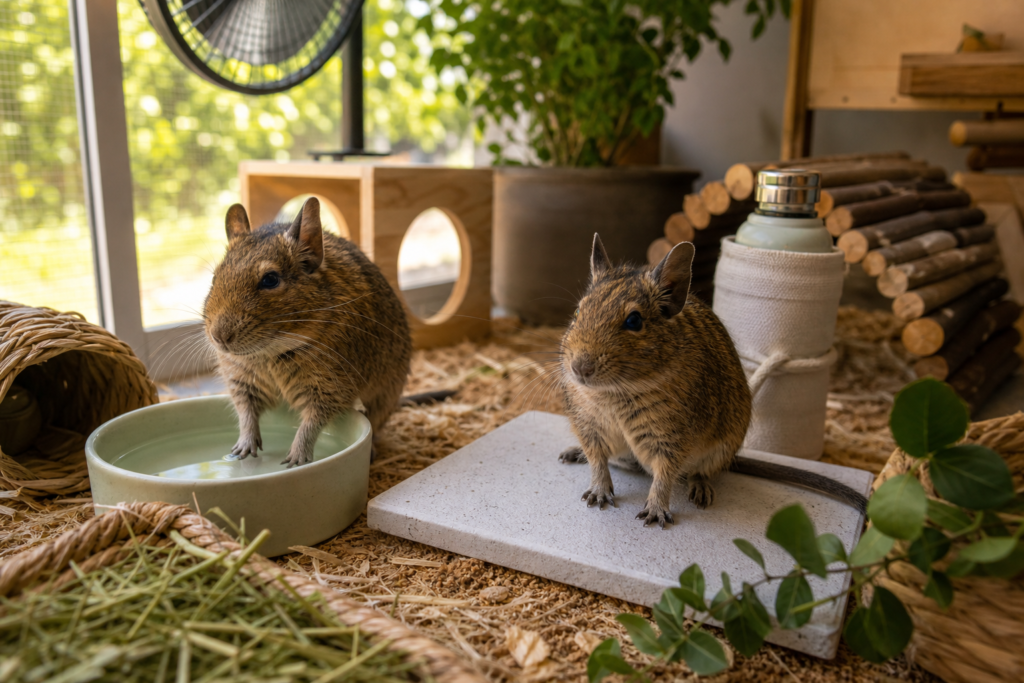
If you use a fan in the room, aim it so that it helps cool the space rather than blowing directly onto your degus. The goal is a cooler room, not a blast of air.
Offer safe ways to cool down
Cooling options should always let your degus choose whether to use them. Never force them onto a cold surface or make the whole enclosure damp.
Useful options include a ceramic tile for lying beside, or a bottle of frozen water wrapped in a towel and placed outside or against part of the enclosure so it creates a cooler zone nearby. General hot weather advice from Woodgreen also recommends wrapped frozen bottles and cool damp towels placed around an enclosure to help pets rest beside them.
Make sure there is still a dry, comfortable sleeping area too. Good degu hot weather care is about choice and balance, not turning the enclosure cold or wet.
Fresh water and moisture-rich support
Degus should always have constant access to fresh water, but in warm weather it is sensible to check bottles and bowls more often. Water can warm up quickly, and bottle spouts can occasionally slow or stick.
Refresh water more than once a day during hot spells if needed. You can also offer your usual safe leafy greens in sensible amounts, as part of normal feeding, to support hydration without suddenly changing the diet.
Avoid sugary treats in summer as well as the rest of the year. PDSA highlights that degus are prone to diabetes, so sweet snacks and inappropriate treats are not a safe way to tempt them to eat or drink.
Reduce heat trapped inside the enclosure
Warm weather can turn clutter into a problem if it blocks airflow or holds heat. Check whether hideouts, fabric tunnels, plastic items or crowded shelves are making the enclosure feel stuffy.
For degu hot weather care, aim for shaded resting areas with space around them and remove anything that seems to trap warmth. If you use hideouts, make sure they have more than one opening where possible so warmer air does not sit inside.
This is also a good time to clean little and often. A fresher enclosure is more comfortable in summer and helps reduce smells that become stronger in hot weather.
Know the warning signs of overheating
Small animals can go downhill quickly when they become too hot, so gentle observation matters. The RSPCA says a degu lying still and flat on their stomach may be overheating and should be seen by a vet immediately for advice.
Other worrying changes can include unusual stillness, obvious distress, faster breathing, weakness or collapse. If your degu seems unwell in warm weather, move them to a cooler area and contact a vet straight away.
Try not to panic, and avoid extreme cooling. Sudden overcooling can also be risky for small pets.
What not to do
A few common mistakes can make matters worse, even when they are done with good intentions.
- Do not place the enclosure in direct sun, even for part of the day.
- Do not use sealed glass tanks or poorly ventilated housing in warm weather.
- Do not drench your degus or make the enclosure wet.
- Do not assume they are fine just because they are quiet. Degus can become distressed without dramatic signs at first.
- Do not leave holiday carers without clear instructions during a heatwave.
If you are going away in summer
Warm weather and holiday plans often arrive together. If you will be away overnight, make sure your degus are checked every day by someone reliable who understands their routine, room temperature and warning signs to watch for.
The RSPCA advises keeping degus in their familiar enclosure where possible, as this is less stressful than unnecessary moving. Leave clear written instructions about cooling steps, water checks and when to call a vet.
This part of degu hot weather care is easy to overlook, but it can be one of the most important.
A kind summer routine for rescue-minded owners
No one gets everything perfect every day, especially during sudden hot spells. The aim is not perfection. It is noticing risk early and making your degus feel safe, cool and settled. 💛
A quick daily check of room temperature, airflow, water and behaviour can go a long way. Small, thoughtful steps are often the best form of degu hot weather care.
If you are learning more about small pet welfare, or thinking about adoption, have a look around Greatfield Small Animal Rescue's website for practical care information and rescue updates.
Quick recap
Keep degus below 20°C, move them away from direct sun and heat sources, improve airflow, offer safe cooling options, refresh water often and act quickly if they seem too hot.
Sharing reliable summer advice can help more small pets stay safe. If this guide helped, please share it with another small animal owner or explore Greatfield Small Animal Rescue to support rescue work and adoption awareness. 🐾
FAQs
What temperature is too hot for degus?
RSPCA guidance says the temperature in a degu enclosure should be no higher than 20°C. PDSA says around 18°C is ideal.
Can I put ice packs straight into a degu cage?
It is better to avoid direct contact with very cold items. Use wrapped frozen bottles or a cool ceramic surface so your degus can choose whether to rest nearby.
Should I move my degus outside in summer?
Usually it is safer to focus on a cool, shaded, well-ventilated indoor environment unless you already have a secure setup designed for safe temperature control.