Why degu care matters
Degus are bright, busy, sociable little animals with huge personalities. They chirrup, dig, climb, chew, dust bathe and communicate in ways that can be absolutely wonderful to watch 🐭💛
They are also specialist pets. Good degu care advice matters because degus are not tiny versions of rabbits, guinea pigs or hamsters. Their diet, housing, temperature needs and social needs are all quite specific. When those needs are understood, degus can be lively, curious companions. When they are underestimated, their welfare can suffer quickly.
May is a good time to talk about degu care basics because brighter, warmer days can change the conditions in our homes. Rooms that were comfortable in early spring can become too warm, sunny windows can heat enclosures, and holiday plans can disrupt routines. A little preparation now can make life much safer and calmer for your degus.
Degus are social animals, not solo pocket pets
One of the most important parts of degu care owners should know is that degus are social animals. In the wild, degus live in groups and use shared burrow systems. They are naturally vocal and interactive, and they usually need the company of other compatible degus to feel secure.
A single degu can become lonely, bored or anxious, even with a kind human nearby. Human attention is lovely, but it is not the same as having another degu who speaks the same language, shares grooming, sleeps nearby and understands all those tiny squeaks.
Introductions do need care. Degus should be matched thoughtfully, with safe gradual bonding and enough space, hides, food bowls and water points so they do not have to compete. If you are adopting, ask the rescue about personalities, previous history and whether a bonded pair or small group is already available.
A good degu home needs space, height and safe enrichment
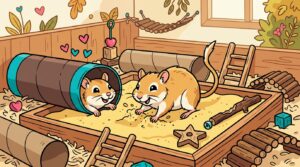
A degu enclosure should allow normal degu behaviour, not just contain the animals. Degus need space to run, climb, jump, dig, chew, forage, nest and rest. A tall cage with safe levels, solid platforms and branches can help them use their natural climbing skills, while deep bedding gives them the chance to dig and burrow.
Degus need plenty of vertical space, safe wood such as apple, pear or beech, tunnels, toys, a solid roof and secure hiding places. Plastic is best avoided where possible because degus chew strongly and can damage or ingest unsafe materials.
A good setup for degu care homes should include multiple resources. That means more than one hide, more than one feeding area if needed, constant hay, fresh water, safe chew items and plenty to do. This helps reduce competition and gives each degu choice.
Dust baths are important too. Degus use them to keep their coat and skin in good condition. Offer a shallow heavy bowl with suitable sand, such as chinchilla sand, two or three times a week for about 20 minutes. Leaving a dust bath in permanently can mean it becomes soiled, so short supervised access is usually kinder and cleaner.
Temperature matters more than many people realise
Degus can struggle in warm conditions. This is especially important as spring moves towards summer. A degu enclosure should generally be kept no higher than 20°C to help prevent overheating.
This can surprise people because 20°C may not feel hot to us. For degus, a sunny room, conservatory, window ledge, radiator area or poorly ventilated space can become risky. Glass tanks and vivariums are also a concern because they do not allow enough air to circulate and may contribute to respiratory or heat problems.
Check the temperature where the enclosure actually sits, not just the general room temperature. Keep cages away from direct sunlight, radiators, fires and draughts. In warmer spells, use curtains, fans positioned safely away from the enclosure, cool tiles or other vet-safe cooling options. Never blow air directly at your degus, and never use sudden chilling methods.
A degu lying still and flat on their stomach may be overheating. If you are worried about heatstroke or any sudden change in behaviour, contact an exotics vet urgently. With small animals, waiting to see if things improve can be dangerous.
The degu diet should be high fibre and low sugar
Diet is another big reason degu care advice needs to be species-specific. Degus need a high-fibre diet, with constant access to good-quality hay. Hay is much more important than nuggets and should make up the majority of what they eat.
A small measured portion of suitable degu nuggets can be offered, alongside appropriate leafy greens. If specific degu nuggets are not available, guinea pig or chinchilla nuggets may be suitable only if they do not contain molasses. Rabbit, hamster and gerbil foods are not suitable for degus.
Degus are prone to Type 2 diabetes, so sugary foods are a real concern. Fruit should generally be avoided, and sweet vegetables such as carrot, beetroot, parsnip and sweet potato should only be tiny occasional treats, if used at all. Many commercial treats are too sugary too, even if the packet looks small-pet friendly.
Always introduce new foods gradually. Watch eating, drinking and toileting habits closely, because changes can be an early sign that something is wrong. And yes, degus need to eat some of their own droppings as part of normal digestion. It is not glamorous, but neither are many parts of rescue life, and here we are ✨
Daily and weekly health checks can catch problems early
Degus are prey animals, so they can hide illness well. A calm daily check helps you notice what is normal for your own pets. Look for bright eyes, clean ears, glossy fur, a clean tail area and normal movement. Watch for discharge from the nose, wetness around the mouth, eye cloudiness, changes in appetite, changes in droppings or unusual quietness.
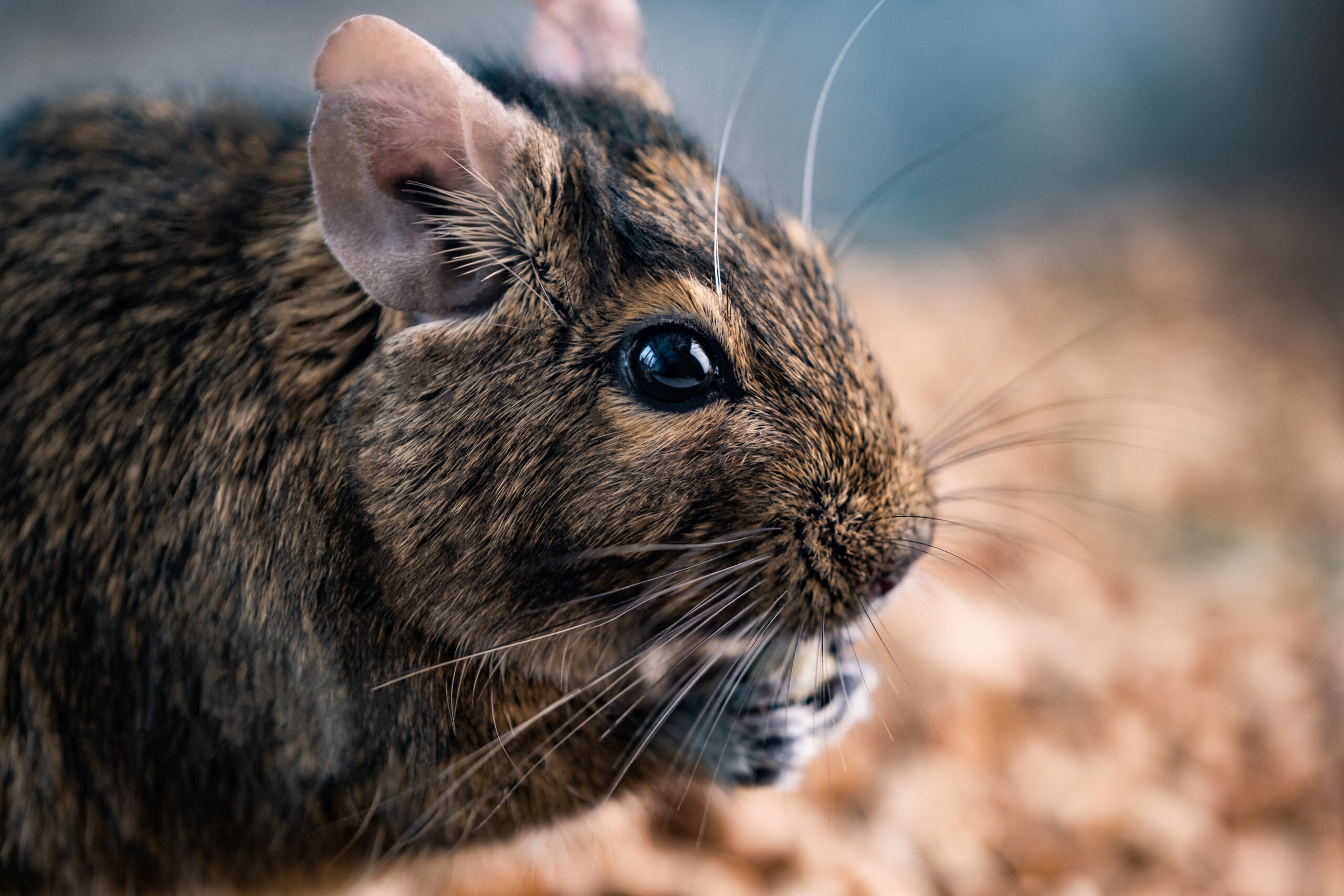
Teeth are especially important. Healthy degu teeth are naturally yellow-orange. White teeth can be a sign of poor health, and wet fur around the mouth may point towards dental problems. Degu teeth grow quickly, so they should be checked at least weekly for colour, length and shape.
Only a vet should correct overgrown or misaligned teeth. Please do not try to trim teeth at home. It can cause pain, fractures and serious injury. A good exotics vet is an essential part of degu care planning, ideally before there is an emergency.
Annual vet health checks are sensible for degus, with a sooner appointment if you notice any change in eating, drinking, toileting or behaviour. If something feels off, trust that instinct and ask for advice.
Handling should be gentle, low and never by the tail
Degus can become friendly and confident with patient handling, but they are still small prey animals. Move slowly, speak softly and let them choose to approach where possible. Food-based training, routine and calm repetition can help build trust.
Never pick a degu up by the tail. This can hurt them badly and is very stressful. If handling is needed, keep them close to the ground and away from shelves or furniture because they may jump. A secure carrier or tunnel can be useful for moving degus without grabbing.
Children should always be supervised by an adult. Degus are not cuddly starter pets, and that is not a criticism of them. It simply means we need to respect who they are. They are clever, active animals who often prefer interaction that feels safe and predictable.
Holiday planning for degus
If you are going away over the spring or summer, plan degu care early. Degus need daily feeding, water checks, health checks and enclosure checks. Their water bottle should be checked for leaks or blockages every day, and any hoarded food that is going mouldy should be removed.
Where possible, keeping degus in their familiar enclosure is usually less stressful than moving them. If transport is unavoidable, use a secure carrier with familiar bedding, hay and enough water for the journey. Avoid travelling during warm parts of the day and speak to a vet if your degus are older, unwell or particularly nervous.
A pet sitter should understand degu basics, including temperature limits, no sugary treats, daily water checks and what warning signs need a vet. Leaving a written care sheet can prevent well-meaning mistakes.
Quick recap
Good degu care practice means thinking about the whole animal, not just the cage. Degus need compatible company, space, height, safe chewing, deep bedding, dust baths, high-fibre food, low sugar, cool temperatures and access to an exotics vet.
If you are researching before adopting, that is a lovely sign. Learning first helps prevent avoidable welfare problems and gives rescue animals a much better chance of settling happily. Degus are fascinating little characters, but they do need committed, species-aware homes.
If you are thinking about adopting or supporting small animal rescue, please explore Greatfield Small Animal Rescue, share this guide, and help spread kinder, better degu care advice 🐭💛
FAQs
Can degus live alone?
Degus are social animals and usually need the company of other compatible degus. A lone degu may become lonely or stressed, so ask a rescue or experienced exotics vet for advice if you currently have one degu.
What temperature is too hot for degus?
A good rule of thumb is to keep a degu enclosure no higher than 20°C. Keep them away from direct sunlight, radiators and poorly ventilated spaces.
Can degus eat fruit?
Fruit is high in sugar and degus are prone to Type 2 diabetes, so fruit should generally be avoided. Choose a high-fibre diet based around hay and suitable measured nuggets instead.
Are degus good pets for children?
Degus can be wonderful to observe, but they are specialist animals and adults should take primary responsibility for their care. Children can help gently with supervision.