When the weather warms up, chinchillas need extra care to stay comfortable and safe. Their dense fur helps them in cool, dry conditions, but it also means they can struggle badly in heat. If you share your home with a chinchilla, a simple summer plan can make a real difference 🐭💛
This guide to chinchilla hot weather care explains what to watch for, how to set up a cooler environment, and what to do if you are worried your chinchilla is overheating.
Why chinchilla hot weather care matters so much
Chinchillas are much better suited to cooler temperatures than warm, stuffy rooms. Woodgreen advises that their environment should ideally be around 10 to 15°C, and Chinchilla Scientia notes that 10 to 20°C is a compatible room temperature range, with risk increasing from about 25°C. In plain terms, chinchillas cope with cool far more easily than heat.
That is why chinchilla hot weather care should start before a heatwave arrives. Waiting until your pet seems uncomfortable can leave you trying to catch up when they already feel unwell.
What temperature is too warm for a chinchilla?
There is no single magic number that guarantees safety, because humidity, airflow, direct sun, and the individual animal all matter too. Even so, the message from welfare sources is clear: chinchillas should live in a cool room, and higher temperatures increase the risk of heat stress.
For practical chinchilla hot weather care, it helps to think in stages:
- Warm day: start monitoring the room more closely and offer extra cooling options.
- Hot room: move quickly to lower the temperature, reduce activity, and keep the space shaded and calm.
- Very hot conditions or any worrying symptoms: treat it as urgent and contact a vet straight away.
Simple ways to keep chinchillas cool safely
The best chinchilla hot weather care focuses on cooling the environment rather than trying to cool the chinchilla directly.
- Choose the coolest room in the house. Keep the cage away from windows, conservatories, radiators, and rooms that trap afternoon heat.
- Block direct sun. Close blinds or curtains before the hottest part of the day.
- Improve airflow carefully. A fan can help circulate air in the room, but do not point it directly at your chinchilla.
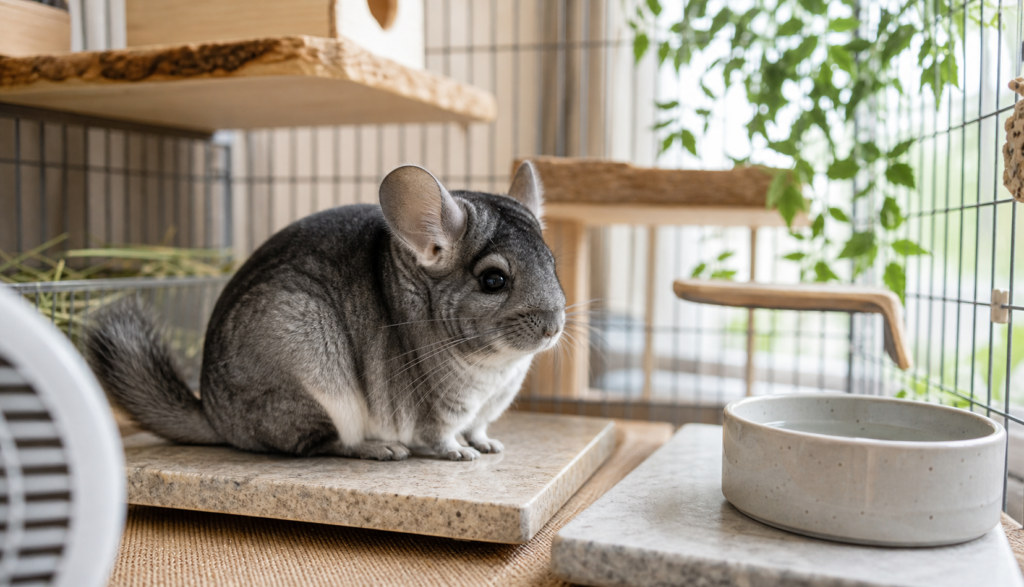
- Offer cool resting surfaces. Ceramic tiles, marble slabs, or other pet-safe stone surfaces can give your chinchilla somewhere cooler to lie.
- Keep water fresh. Check bottles regularly and refill with cool, clean water as needed.
- Reduce stress and activity. During hot spells, keep handling gentle and brief, and avoid encouraging lots of exercise in the warmest hours.
- Watch humidity as well as heat. Bacchus Residents recommends a dry environment with humidity around 50 to 60 percent.
If you have air conditioning, use it sensibly so the room stays steadily cool rather than swinging from very hot to very cold. Gentle stability is the goal.
Cooling ideas to avoid
Kind intentions can sometimes lead to risky choices, so this part of chinchilla hot weather care is important too.
- Do not mist your chinchilla with water.
- Do not place them outdoors to “catch a breeze” during hot weather.
- Do not sit ice packs where they can be chewed or cause condensation problems in the enclosure.
- Do not move the cage repeatedly from room to room all day if it creates extra stress.
- Do not rely on a dust bath as a cooling tool. Dust baths help coat care, not temperature control.
If you are ever unsure, the safest route is to cool the room, offer a cool surface, and phone your vet for advice.
Signs a chinchilla may be overheating
One of the most useful parts of chinchilla hot weather care is recognising early warning signs. Contact a vet urgently if your chinchilla seems:
- lethargic or unusually still
- less interested in food
- weak or unsteady
- distressed, restless, or not behaving normally
- hot to the touch, especially around the ears
- collapsed or struggling to respond
Some signs can be subtle at first. If your chinchilla seems “not quite right” during hot weather, trust that instinct and get professional advice quickly.
What to do in an emergency
If you think your chinchilla is overheating, chinchilla hot weather care becomes first aid until a vet can take over.
- Move them to the coolest safe room you have.
- Phone a vet immediately and say you are concerned about overheating or heatstroke.
- Offer a cool surface and a calm environment.
- Keep noise, handling, and stress to a minimum.
- Do not dunk them in cold water or use extreme cooling methods.
Heat-related illness can worsen quickly. It is always better to ring early than wait and see.
A simple summer routine for chinchilla hot weather care
A calm routine can help you stay ahead of problems:
- Check the room temperature morning, afternoon, and evening.
- Refresh cool surfaces and water before the hottest part of the day.
- Close curtains early if the room catches the sun.
- Do a quick wellbeing check to make sure your chinchilla is bright, eating, and moving normally.
- Plan cleaning, handling, and interaction for cooler times of day.
This kind of steady chinchilla hot weather care is especially helpful for older pets, overweight pets, or anyone with underlying health issues.
Supporting rescue animals with specialist needs
Chinchillas are wonderful animals, but they are not low-maintenance pets. Their need for cool temperatures, space, and specialist care is one reason rescue education matters so much. If you are thinking about adoption, it is worth learning about these needs before bringing a chinchilla home.
You can also explore the animals for adoption and care information on the Greatfield Small Animal Rescue website if you would like to learn more about species with more specialist housing and environmental needs.
Quick recap
- Chinchilla hot weather care starts with keeping the room cool, shaded, and well ventilated.
- Offer cool stone or ceramic resting areas and fresh water.
- Avoid direct sun, hot rooms, and rushed last-minute fixes.
- Know the warning signs and call a vet promptly if your chinchilla seems unwell.
If this guide helps, please share it with another small pet owner. Thoughtful summer care can prevent emergencies and make life much kinder for these lovely little animals 💛
Further reading
- Woodgreen Pets Charity: How to make your chinchillas feel at home
- Chinchilla Scientia: Characteristics of the long tail chinchilla
- Bacchus Residents: Chinchilla Care
FAQ
Can a fan keep a chinchilla cool?
A fan can help move air around a room, but it should not blow directly onto your chinchilla. It works best as part of a wider chinchilla hot weather care plan that includes shade, cool surfaces, and careful temperature checks.
Should I put my chinchilla outside in summer?
No. Outdoor temperatures can rise quickly, and chinchillas are very sensitive to heat. Indoor climate control is much safer.
What is the best cooling surface for a chinchilla?
Pet-safe ceramic or stone slabs are often useful because they stay cooler than soft bedding and give chinchillas a comfortable place to rest.